The EU-Mercosur free-trade deal spanning Argentina, Brazil, Paraguay, and Uruguay has raised alarm over poor animal welfare standards in the livestock industry.
What was promised in the agreement was “we were going to align our standards with Mercosur countries and apply our EU animal welfare standards on imported products; that is not the reality on the ground,” said Carlos Jalil at Eurogroup for Animals, an advocacy organisation, speaking to EUobserver on Wednesday (6 May).
The agreement, covering one of the world’s largest free-trade areas, provisionally entered into force on 1 May, despite pending approval from the European Parliament.
The long-negotiated deal reduces tariffs and eases imports with EU member states and global leaders in beef production in Argentina, Brazil, Uruguay, and Paraguay.
The urgency of the pact followed mounting tensions with the EU’s primary trade partner, the US.
And the European Commission defended the deal’s animal-rights safeguards.
EU animal welfare legislation applies also to imports in relation to slaughter and … transport of live animals. Compliance or equivalency with such legislation is determined following on-the-spot verifications in third countries made by the commission,” it told EUobserver on Thursday.
“The Mercosur agreement sets out conditions for a fruitful dialogue, in a long term process, of enhancing animal welfare conditions bilaterally and internationally – including via a specific working group that will look at this matter,” it added.
But for all that, advocacy groups say insufficient protections have been negotiated to enforce European standards on animal welfare, as well as deforestation.
The EU-Mercosur deal spoke of “alignment of production standards between domestic and imported products,” Eurogroup for Animals' Jalil said it risked promoting intensive animal agriculture outside Europe.
“Animal welfare does not play an important role in EU inspections,” also said Sabrina Gurtner from the Animal Welfare Foundation in Germany, adding that the EU's primary concern was food safety.
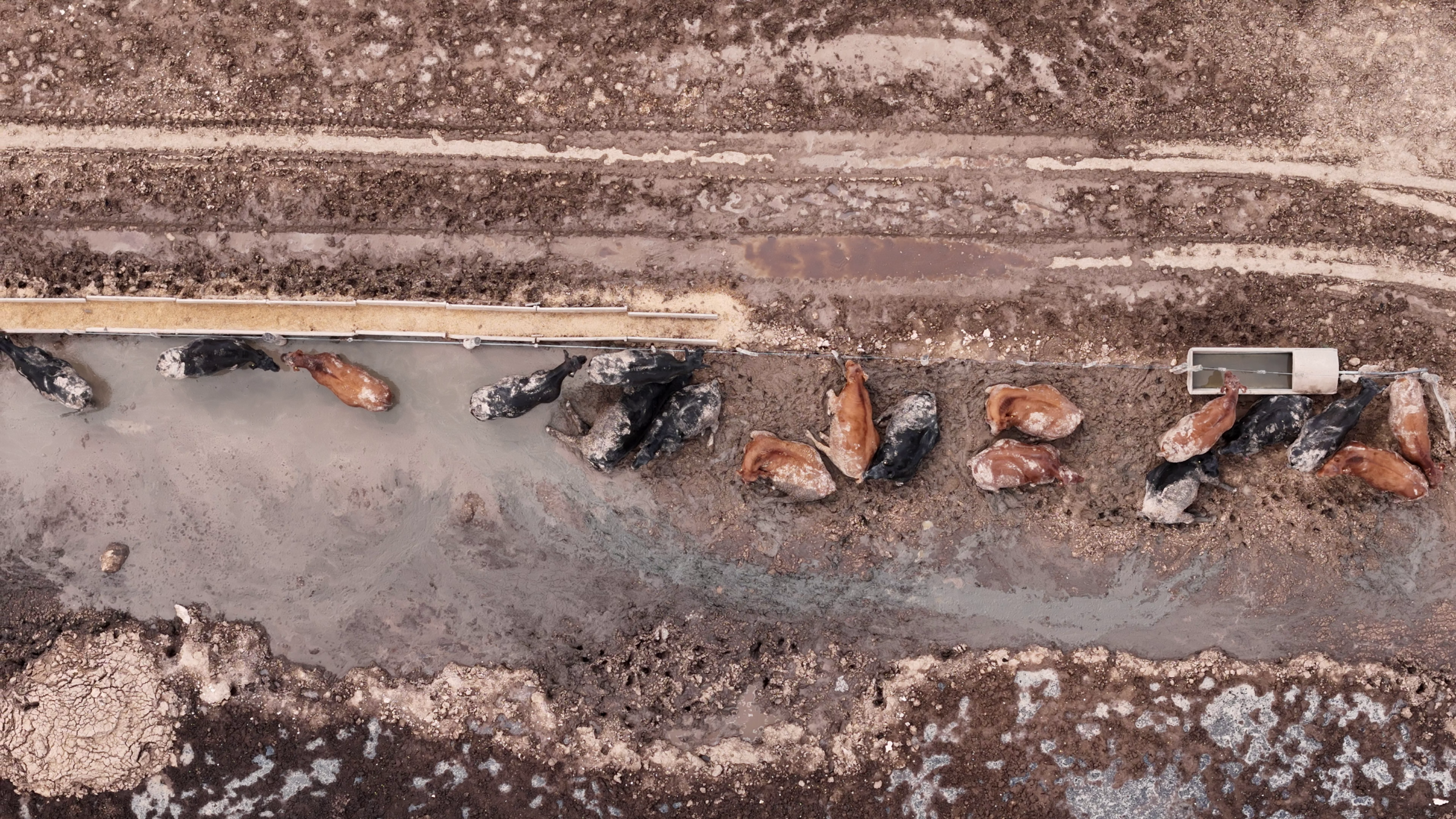
Footage released by Animal Welfare Foundation, who have been studying animals in feedlots across the South American continent since August 2025, illustrated lack of hygiene, with animals lying in muddy excrement, given turbid drinking water, and limited access to cramped outdoor spaces.
In 2024, half of all bovine meat imports to the EU were from Mercosur nations.
The livestock already being imported to Europe from the lots in the Animal Welfare Foundation's survey, is also raised on a majority concentrated feed diet, rather than one of grass or hay.
And "the EU is obviously aware of these feed lot conditions,” said Gurtner.
Animals were prone to disease and often overweight, but “EU trade policy has mostly focused on the final product, not what happens before and how products are made,” also said Jilal.
EU authorities have taken some steps to safeguard caged animals in Europe, but these "will not help offset the effect of Mercosur, since we import chickens and livestock from them,” he added.
Public pressure
The Animal Welfare Foundation is to release a short film to document their findings on 22 May.
And advocacy groups expect change to come, due to grassroots pressure by EU consumers for more ethical food supplies.
An Eurobarometer survey from 2023 showed that 84 percent of Europeans demanded better protection of farmed animals, and many expressed concern at the possible decrease in quality of the meat market following the Mercosur deal.
The Commission said it proposed new rules on transport of live animals in 2023, but that the European Parliament and EU states had not yet agreed a final version.
"The EU also has a long tradition of taking actions to promote the EU animal welfare standards at multilateral and bilateral level," the spokeswoman told EUobserver, citing its funding for the World Organisation for Animal Health, an intergovernmental association based in Paris, which dates back to 1924.
 Russia is likely preparing for a massive autumn mobilisation of over a million soldiers (Ukraine Battlefield update, Day 1,589)
 Gaia Neiman