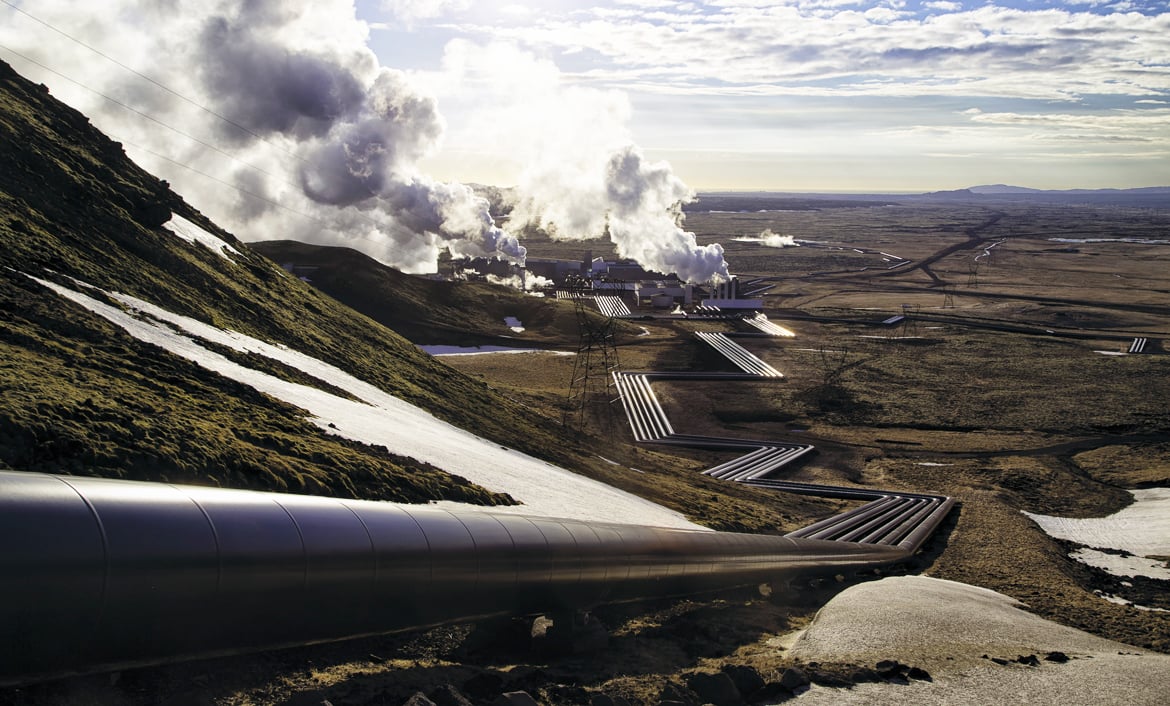
The European Union unveiled plans Tuesday (8 March) to cut reliance on Russian fuels but quickly bumped up against concerns it was substituting one form of pollution for another.
The proposal to diversify energy supplies also quickly ran into another challenger: Russian deputy prime minister Alexander Novak, who threatened to cut gas supplies to Europe via Nord Stream 1, a pipeline running from Russia to Germany.
Novak said Russia could take such action to “mirror” penalties imposed by the Europeans on Russia over its invasion of Ukraine, including the German “ban” on the new Nord Stream 2 gas pipeline and a possible forthcoming EU embargo on Russian oil.
The main element of the proposal made on Tuesday calls for gas storage levels to be raised to 90 percent capacity by 1 October, from their current level of 30 percent.
To that end, the EU commission announced that it will support joint procurement for member states – as it did for the Covid vaccine strategy.
Brussels is also considering stepping up its gas imports from other countries such as Azerbaijan and LNG imports from the US, Qatar or Egypt.
But there are growing concerns that the EU’s push for alternative gas sources will simply lead to burning of the most-polluting sources as Russian gas gets phased out.
![[Interview] ‘Some of the resistance comes from people fearing they’ll end up without a job,’ says industry expert on Europe’s slow electrification](https://static.euobserver.com/2026/07/anja-van-de-gronde-PY7r5dJ_v-Y-unsplash-2400x1602.jpg)


 What went wrong? Russian missile attack on open-air weapons exhibition exposes catalogue of errors (Ukraine Battlefield update, Day 1,615)
 Elena Sánchez Nicolás