 Von der Leyen may be caving to Meloni, but on green investment, relaxing EU deficit limits is exactly right
The European Central Bank will present new economic projections later this week which will almost certainly be worse than those published in March.
ECB board member Isabel Schnabel said last month that the energy shock has already “moved beyond the adverse scenario which assumed a rapid normalisation of oil prices.”
That means June’s inflation projections for this year will be higher than the 2.6 percent previously expected. And growth will be lower, probably close to the 0.9 percent currently estimated by the EU Commission.
The question is how Europe should respond.
An important clue about what route the EU intends to take came last week when the commission decided to relax debt and spending limits for energy-related investments by member states.
The commission wants member states to invest in batteries, heat pumps, renewables — anything, really, that gets us off of fossil fuels.
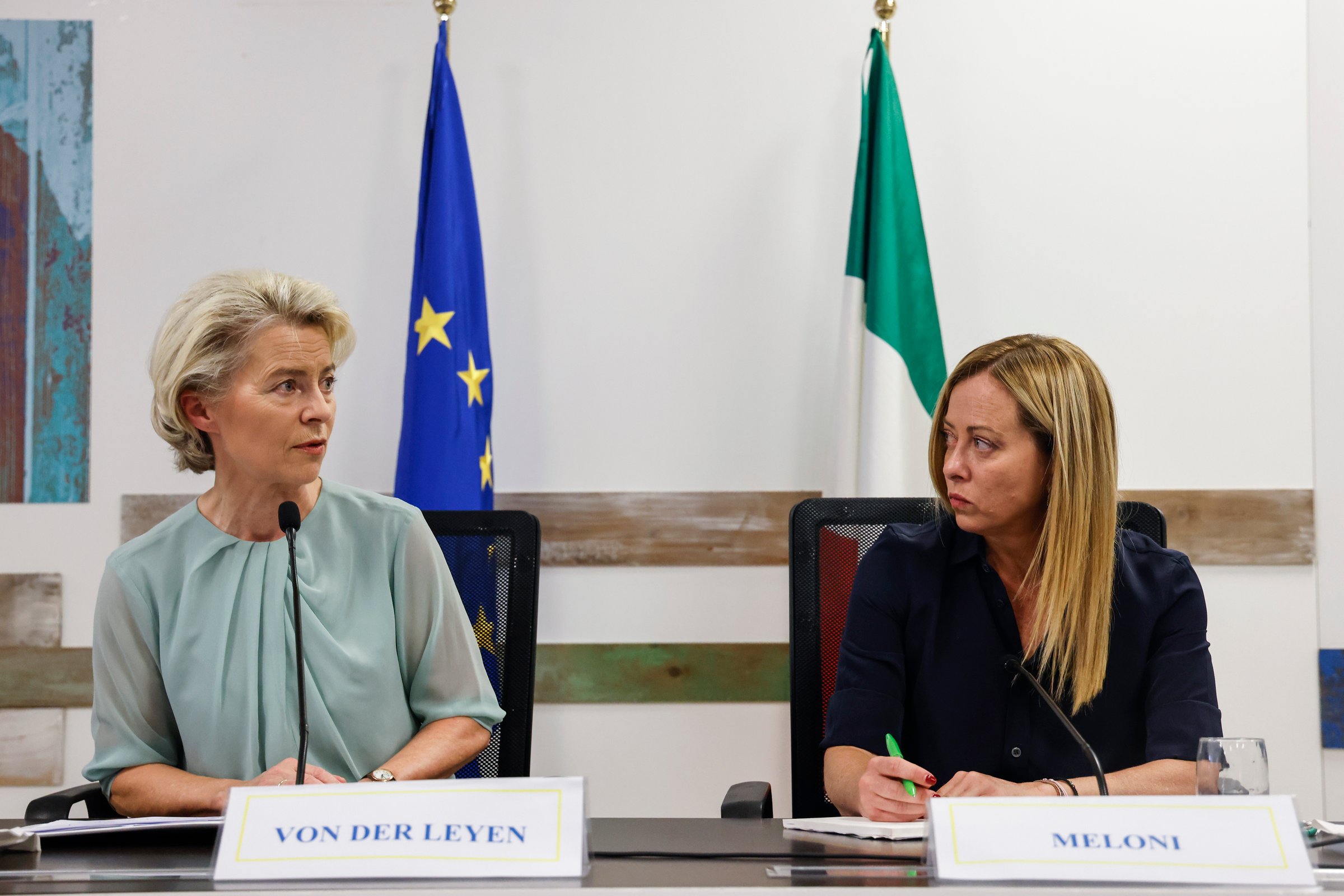
Many in the Brussels bubble saw the plan as concession to Italy’s prime minister Giorgia Meloni.
“Ursula cannot say ‘no’ to Giorgia,” Brussels journalist David Carretta concluded in his newsletter last week, and he may well be right.
Italy has spent around €1bn on fuel subsidies since March and Meloni has pressed the commission relentlessly to allow higher deficits than the current three percent of GDP limit.
The EU already allows countries to spend an additional 1.5 percent of GDP annually on defence, so why not on energy?
“We cannot justify to our citizens that the EU allows financial flexibility for security and defence and not energy,” Meloni wrote to commission president Ursula von der Leyen last month.
Reasons for scepticism
Italy doesn’t have the best track record when it comes to energy policies. And the value of the additional flexibility — 0.3 percent of GDP per year until 2028 — is almost identical to the cost of Italy’s fuel subsidies, which amount to 0.29 percent of GDP.
That is to say: there are reasons to doubt Italy will use the money for batteries, heat pumps, renewables and grid investments as the commission intends.
Still, even if some member states decide to use the fiscal flexibility for less-than-ideal purposes — and given the long-term fiscal costs of climate inaction — it makes sense for the EU to relax debt and spending limits for energy-related investments,
Even in normal times, tight EU fiscal rules mean most countries do not have the fiscal space needed to meet climate targets and invest in clean energy. Earlier this year, the New Economics Foundation estimated debt levels would rise if not enough is invested in renewables.
The economic fallout from the Gulf crisis and the long-term disruption of the Strait of Hormuz only makes that challenge greater. Several fiscally-conservative member states, including the Netherlands and Sweden, are expected to push back against the proposal at a meeting of finance ministers later this week.
That may delay or even stop the measure. Spending less, in turn, might reduce deficits in the short term. It would also leave Europe more exposed to future fossil-fuel shocks, with all the inflation, weak growth, fiscal costs and higher debt that come with them.



 Wester van Gaal