Production: By Europod, in co-production with Sphera Network.
EUobserver is proud to have an editorial partnership with Europod to co-publish the podcast series “Briefed” hosted by Léa Marchal. The podcast is available on all major platforms.
Find the full transcript below:
Germany and France believe that joining the European Union has become too slow a process, often taking decades. Their solution? A more gradual path to integration.
What do candidate countries think about it?
The beautiful coastal town of Tivat, in Montenegro, hosted the EU–Western Balkans Summit last Friday.
Not every European head of state or government made the trip. But many did, hoping to send a positive signal to countries aspiring to join the European Union.
Among them were Emmanuel Macron and Friedrich Merz, who also came with a message of their own.
Arriving under bright sunshine, the German chancellor pointed to a simple fact: the EU has not welcomed a new member state in 13 years. And in his view, that needs to change.
To make enlargement move faster, the French and German leaders presented a set of proposals to the other 25 EU countries.
The idea is a more gradual, less formal form of integration that would give candidates stronger incentives along the way.
Macron said: “When a country has made progress and successfully adopted part of the EU acquis in a given area, it should be able to start taking part in the relevant EU structures in that area.”
The debate was reignited a few weeks ago, with Friedrich Merz raising the idea of creating “associate members.”
Under such a status, countries could attend meetings of European leaders or ministers, for example, but without voting rights.
The goal is to offer something more tangible to countries that have been waiting at the EU’s doorstep for years and have already completed many of the key steps in the accession process.
So what do the countries concerned think?
At the moment, two countries are close to completing their accession negotiations: Montenegro first, and Albania second.
In our May 26 episode on the Western Balkans, we looked at their respective chances of joining the EU in the coming years.
But back to gradual integration.
Albania, which has officially been an EU candidate since 2014, is broadly supportive of the idea. Prime Minister Edi Rama welcomed the German Chancellor’s proposals.
He sees them as intermediate steps, not as a substitute for full membership, which remains the ultimate goal.
Montenegro’s president Jakov Milatović also praised the Franco-German initiative, describing it as constructive.
But mostly for others, not for Montenegro.
That’s because Montenegro is the only candidate country that has already begun drafting its accession treaty.
At the end of last Friday’s summit, leaders on both sides said they hoped Montenegro could become a full EU member by 2028.
An ambitious timeline.
What about the other candidates?
Originally, Friedrich Merz’s proposals were aimed primarily at Ukraine.
Ukraine has only been an EU candidate since 2022. It has moved at remarkable speed in meeting accession requirements, but it still has a long way to go.
A gradual integration process would allow Europeans to embrace Ukraine more concretely without making the full commitments that membership requires.
But Ukrainian president Volodymyr Zelensky has already rejected the idea.
Ukraine wants full EU membership backed by a tratey that formally binds Ukraine to the 27 Member States.
Because, in the end, the main issue is security.
But could associate membership still offer something meaningful to Ukrainians while they wait for full accession?
In reality, probably not much.
At least not in Ukraine’s case.
Ukraine is already closely integrated with the European Union. It enjoys privileged access to the EU market.
More than 95 percent of customs duties have been removed for trade with the EU. Ukrainians are also part of the EU’s free roaming area. And the country receives extensive financial and technical support to help defend itself against Russia.
So yes, taking part in certain meetings in Brussels would be interesting.
It would even carry symbolic weight.
But it would not fundamentally change the situation.
For the countries of the Western Balkans, the situation is different.
Their immediate needs are not the same, and they are further along in the accession process.
Giving them a seat at the table inside European institutions would be a form of recognition for the progress they have already made.
It would also serve as a kind of apprenticeship before full membership.
From a geopolitical perspective, it would help the EU strengthen its influence in the region at a time when China and Russia are becoming increasingly active in countries such as Serbia and Bosnia and Herzegovina.
 The EU would pay a high price if it lets down Ukraine on membership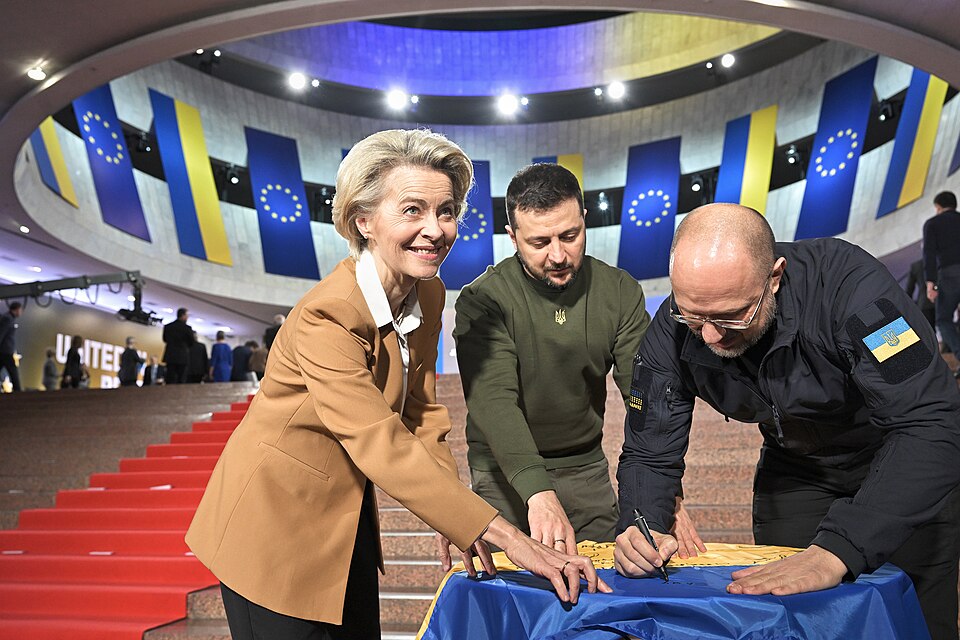
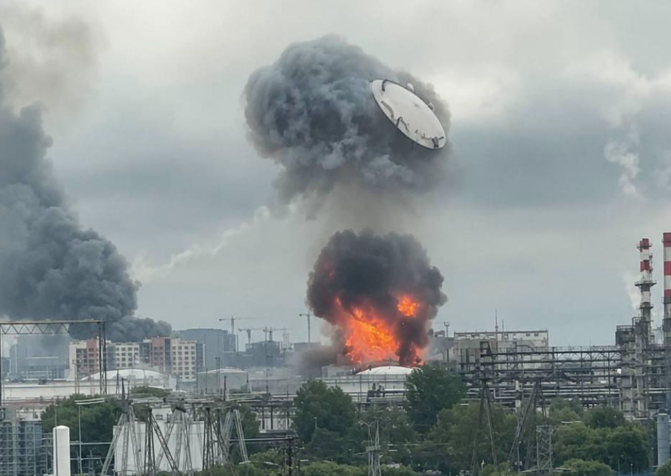
 Shocked Russians watched worst attack on Moscow since the start of war (Ukraine Battlefield update, Day 1,575)