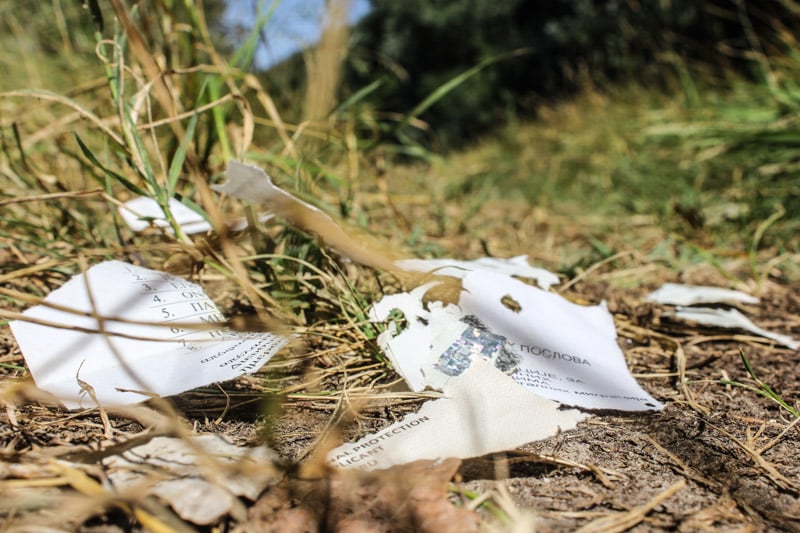
Official figures on the Balkan migratory route are underestimating the real number of people passing through Europe’s Eastern corridor, diluting the urgency of helping children travelling alone, according to advocacy group Save the Children.
A report by Save the Children found that underreported crossings reduce the visibility of children on the move, increasing the danger many of them are facing as they travel without adult supervision.
The crackdown on migration culminating in the launch of the EU’s asylum and migration overhaul next month is likely to add further complications as member states shore up external borders.
The drop of reported crossings also lowers the urgency for funding. Save the Children has already seen a drastic reduction in reception facilities and organisations catering to the needs of children.
The EU’s border police Frontex says irregular border crossings in 2025 decreased to 12,528 in the Western Balkans, down 42 percent from the previous year.
Yet Save the Children’s report, published last Thursday (30 April), looks at the national statistics of individual countries along the popular migration route and found it far exceeds the EU number when put together.
In Bosnia and Herzegovina alone, last year’s requests of asylum amounted to 13,987, “which exceeds Frontex data for the entire route,” the report explained. Almost 15,000 ended up in Croatia.
Similar trends were found in the numbers across individual nations on the Balkan route, from Serbia to Slovenia – despite the fact that a large proportion of migrants originate from Turkey, a country whose nationals can travel to several Balkan countries visa-free, and are not included in the tally of irregular migrants.
The neglectful monitoring of human traffic has the negative effect of twisting the narrative around the gravity of migration.
“We do see consistently that around 10 to 20 percent of the people transiting are children, 10 to 20 percent of the children crossing, or better, even more, are unaccompanied,” Federica Toscano, a senior advisor at Save the Children, told EUobserver.
The reduced visibility of how many people, and therefore how many minors are crossing into the Balkans, has become a cause for concern for Toscano as organisations on the ground are slowly closing up shop.
“In general, we have seen a decrease of funding in all organisations in the region…limiting their availability to be present in the territory to provide support services and data monitoring along the route,” said Toscano.
“Our worry is that we do see people that are extremely vulnerable passing through, we do see reception centres that are closing down, and we see that the numbers of crossings do not reflect the numbers being reported by Frontex.”
Frontex Rebuttal
Although official figures are often just a reflection of the number of people using a country’s remaining reception centres, more than the actual number of individuals transiting, Save the Children has reported a reduction of centres across the Balkans, with Serbia and Bosnia reducing those still on their territory by half since 2024.

 THIS WEEK: Angry Trump meets EU leaders at G7 summit, as Ukraine starts accession talks
 Gaia Neiman