This story is a part of the weekly newsletter about economy, defence, and tech in the eastern flank of Nato, How we cee it.
As Russia’s war against Ukraine rages into its fifth year — with stray drones, aircraft incursions and threats felt across the Baltics — the question of whether citizens are willing to defend their country is becoming increasingly important. For countries like Estonia, it has been a key research focus for years.
The latest results of the annual survey published by the Estonian ministry of defence came in on Monday (1 June). They show that while Estonians’ willingness to take part in defending the country remains high overall. However, the biggest perceived threats are misinformation and cyberattacks, not a big military conflict.
A clear majority of Estonia’s population, 81 percent, believes the country should mount armed resistance if attacked by another state, regardless of the attacker.
About 62 percent said they would be willing to take part in the defence according to their abilities and skills, unchanged from the previous two years. Willingness is markedly higher among ethnic Estonians (69 percent) than among residents of other ethnicities (48 percent).
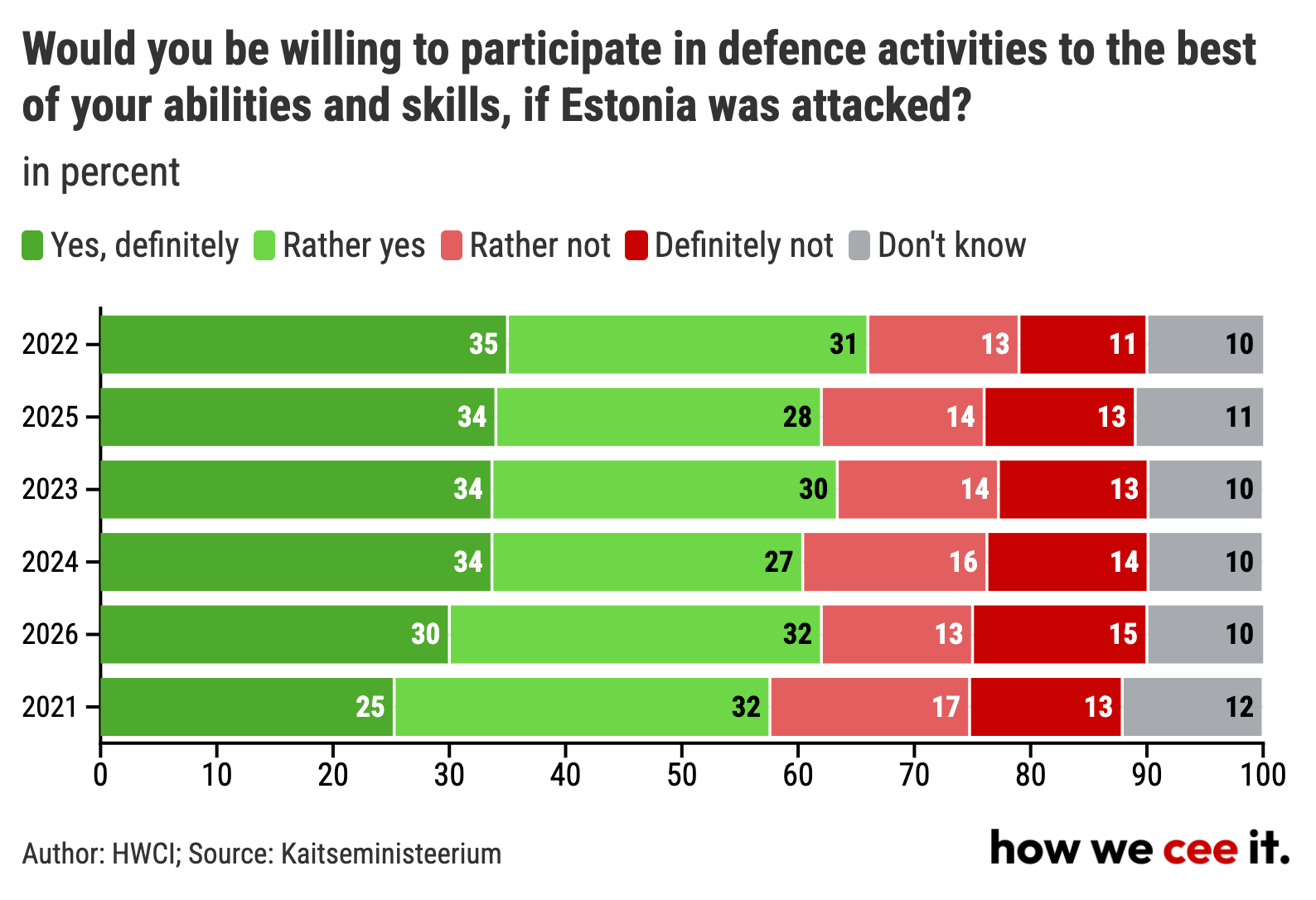
Of those willing to participate, 14 percent say they would take part in direct military defence, while 42 percent would assume a supporting role such as logistics or rear-area assistance.
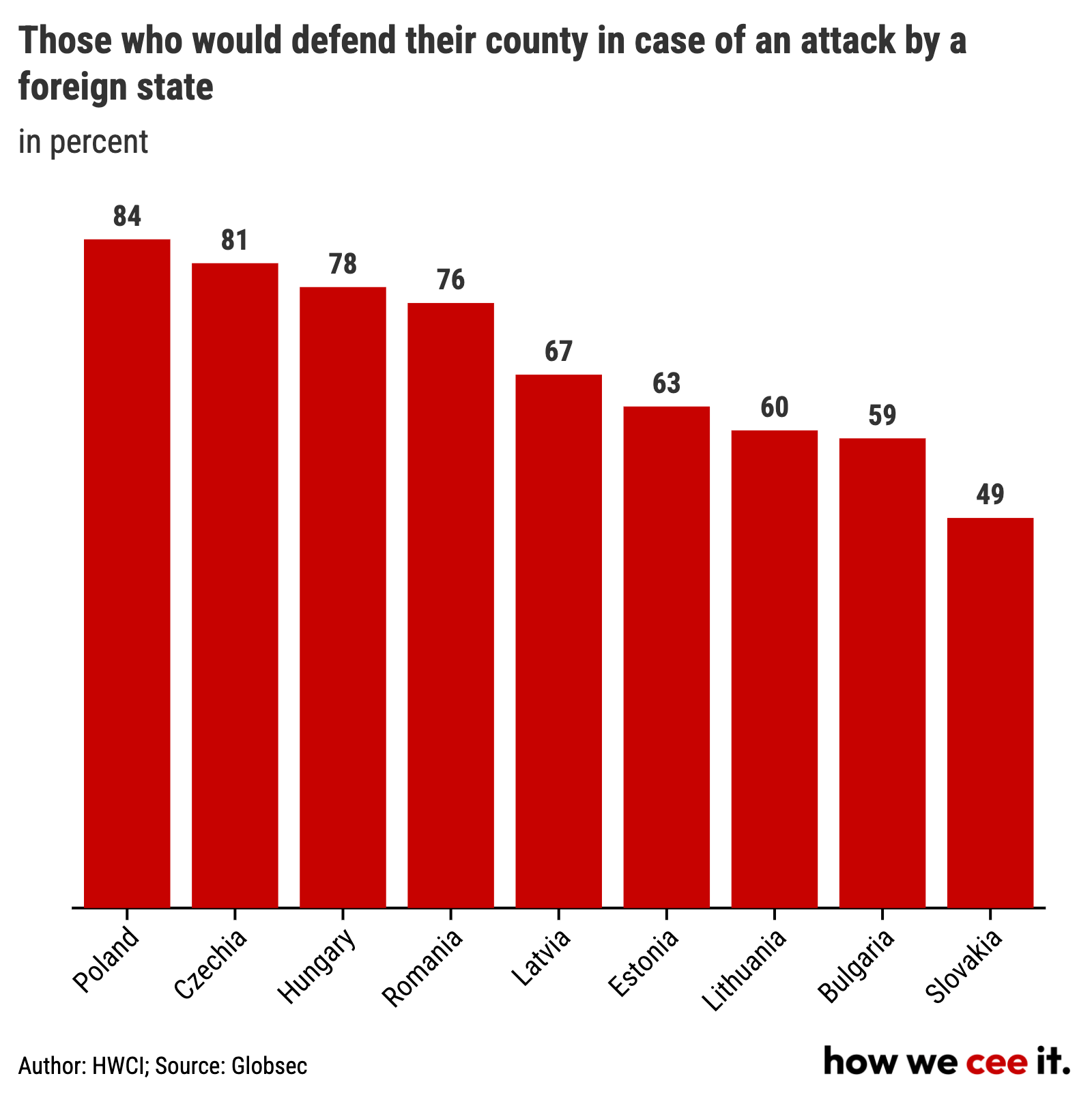
Set against the wider context of central and eastern Europe, Estonians’ willingness to defend their homeland sits somewhere in the middle, according to data collected by the Bratislava-based think tank Globsec in early 2025.
Poland shows the highest willingness, at 84 percent, followed by the Czech Republic (81 percent), Hungary (78 percent) and Romania (76 percent). Estonia, at 63 percent, ranks behind Latvia (67 percent) but ahead of Lithuania (60 percent), Bulgaria (59 percent) and Slovakia, which closes the ranking at 49 percent.
Looking across the Gulf of Finland, the 2025 Finnish survey conducted by the Advisory Board for Defence Information found that 78 percent of Finns believe the country should be defended by arms even if the outcome is uncertain, and 80 percent expressed personal willingness to take part in defence tasks.
 THIS WEEK: ECB set to hike rates, as capital markets union and climate top the EU agenda
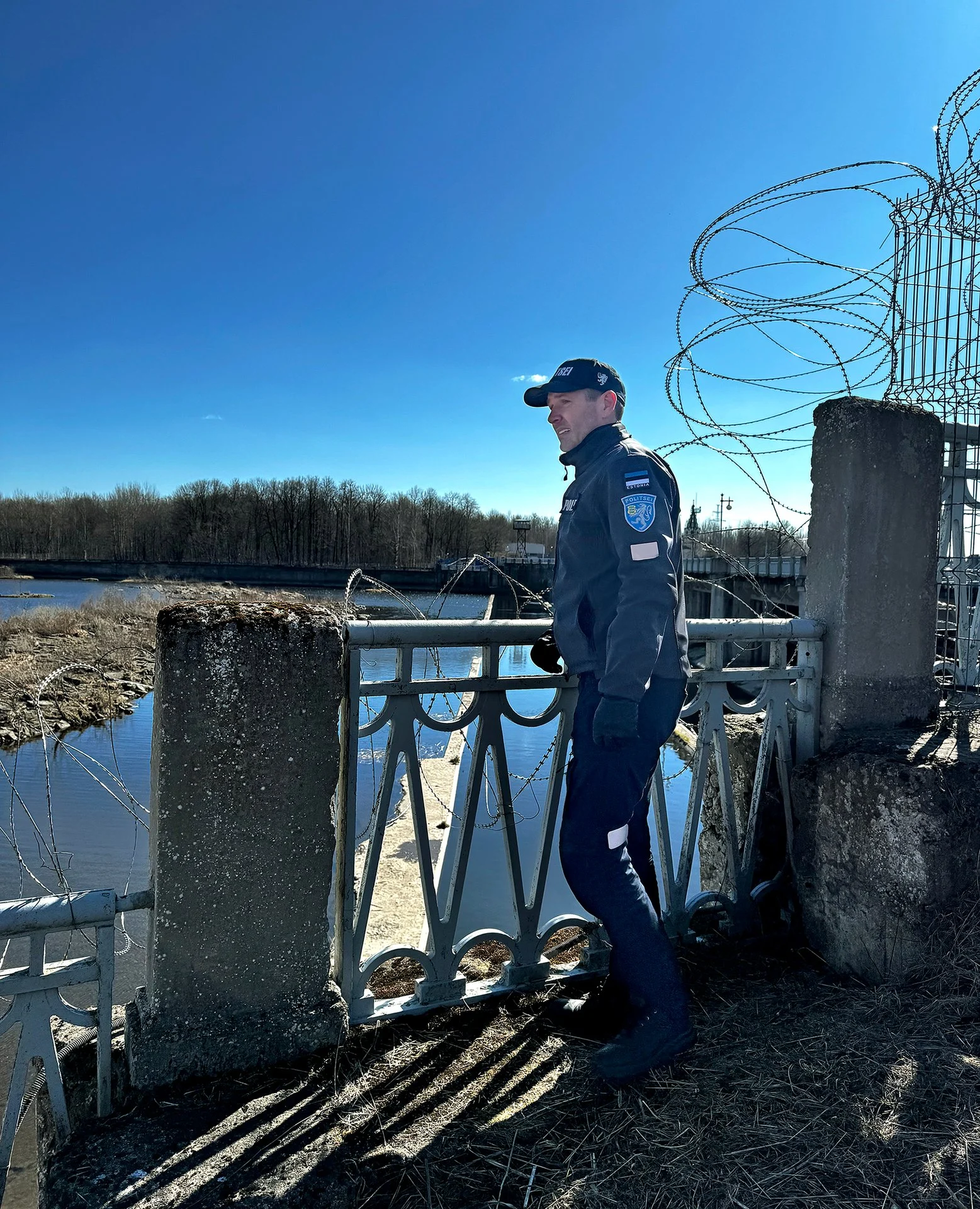
![Kaupo Rosin, director general of the Estonian foreign intelligence service: 'Most [Russian] soldiers have a low IQ level; they are convicts from the lowest strata of society. This is not an army you could use for sophisticated operations. Instead, they keep sending in troops blindly, sending them to their deaths'](https://static.euobserver.com/2026/04/1.webp)


 Tomáš Hrivňák