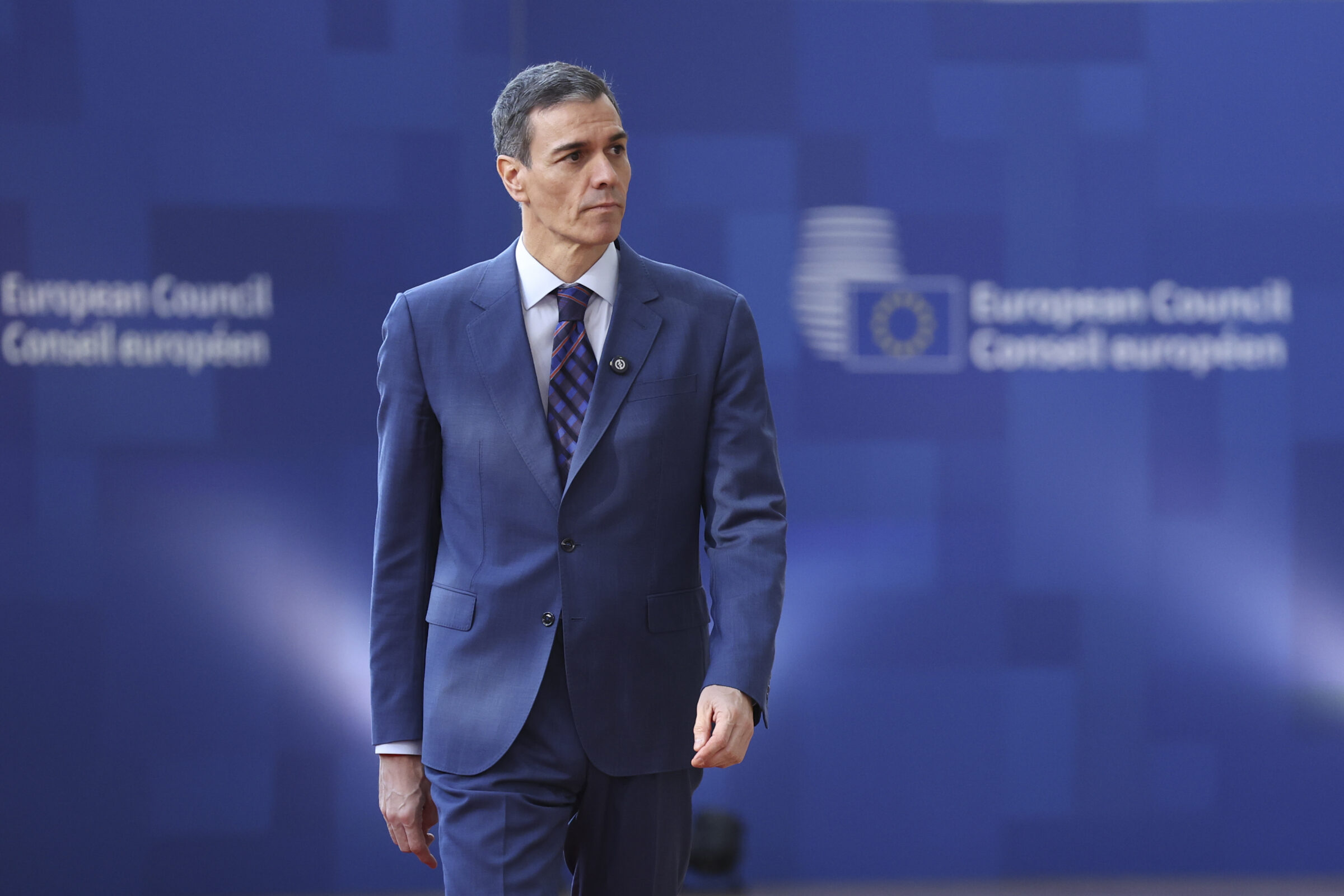
 Pedro Sánchez: EU hero or Spanish problem?
Spanish prime minister Pedro Sánchez has once again made international headlines – and not in a good way, this time.
As a Spaniard outside Spain, I often bump into people who praise his foreign policy and economic track record. As I argued in a recent analysis, many international observers see him as a hero in Europe, willing to defend multilateralism, social policies, peace, and a more ethical foreign policy.
Then you open the Spanish newspapers, listen to televised debates or speak with friends and relatives back home, and the reality feels entirely different: Exhaustion and polarisation define pretty well the political climate in Spain.
Why?
Economic growth figures, diplomatic visibility with Gaza and the war in Iran, and speeches on the global stage about international law and human rights have caught the eye of an international community that is struggling daily with a world in polycrisis mode, dominated by an aggressive rhetoric of leaders such as America’s Donald Trump and Russia’s Vladimir Putin. Sánchez represents the opposite.
But many Spaniards experience politics differently.
Daily scandals and political games have been poisoning the public debate for years. Corruption allegations, agreements with Catalan separatist parties, or confrontations with the judiciary are just some examples that have dominated daily headlines in Spain, partly increasing what we call “crispación política” (a perpetual political hyper-tension and polarisation that makes Spanish families ‘ban’ political debates at Christmas dinner).
At the same time, and despite optimistic macroeconomic headlines in Spain, there are structural problems with no easy fixes.
To name a few, Spain still has a youth unemployment rate near 25 percent (the worst in Europe). And while the latest labour reform aimed to break down with precarious contracts, many still rely on underpaid and seasonal roles. At the same time, housing prices surged over 12 percent last year, pushing the average rent in cities like Madrid or Malaga higher than ever. For a population where many earn close to the minimum wage of roughly €1,200, paying rent or staying afloat as prices keep rising becomes a daily struggle.
To many abroad, these complexities are not really understood.
Sánchez came to power after a no-confidence vote in 2018, and later won elections in 2019 to form a left-wing coalition with the Podemos party.
He then lost in the July 2023 elections, but the conservative Popular Party failed to form a governing coalition — paving the way for Sánchez to secure a new term in a minority coalition with the left-wing Sumar alliance and the support of Catalan separatist parties, in exchange for a controversial amnesty law linked to the 2017 Catalan independence bid.
During this third mandate, he briefly considered stepping down amid a judicial investigation into his wife in 2024.
His fragile coalition also suffered in October 2025, when the Catalan separatist party Junts withdrew its support from the government. The opposition however was unable to push a non-confidence motion.
But the worst blows to his domestic credibility have been the scandals that hit the PSOE government during this period.
Today, Sánchez’s own inner circle is under intense judicial scrutiny: his brother, his wife, former transport minister José Luis Ábalos, party official Santos Cerdán, Spain’s attorney general, and even former socialist prime minister José Luis Rodríguez Zapatero have all faced judicial investigations.
Meanwhile, the country is still operating under the 2023 budget. Since then, the Spanish government has been unable to put forward a new economic plan.
Spain must hold its next general election before August 2027 and Sánchez appears ready to run again (because, unlike in other countries, Spanish prime ministers have no term limits).
Back at home, supporters see him as pragmatic, capable of keeping a fragmented and polarised country together. Critics see him as an opportunistic leader who would sacrifice almost anything to remain in power.
Sánchez now has just over a year to convince his own citizens that he is the leader the rest of the world believes him to be — or perhaps it is time for a female candidate and a much-needed renewal.
Risky, but not crazy.

 Elena Sánchez Nicolás