
Hungary’s opposition stronghold mayor Gergely Karácsony says former prime minister Viktor Orbán’s illiberal system has not merely lost power but collapsed, as the incoming government of the Tisza party promises to restore democratic norms after 16 years of Orbán rule. In an interview in Bratislava, Karácsony praised prime minister Péter Magyar’s cabinet picks, said Budapest had helped to preserve democratic resistance during the Orbán era, and warned that Europe still lacked answers to the social tensions driving populism. He also called for a long-overdue “Budapest Act”, criticised billions spent on government offices in Buda Castle, and said Hungary’s fragmented opposition would need to reinvent itself from scratch.
In the interview we discussed, among other things:
- What his relationship is like with Magyar;
- How he will be able to work together with his former challenger Dávid Vitézy, who has become a Tisza minister;
- What might happen to the luxurious government buildings in the Castle District;
- How the Hungarian political map might be transformed;
- What role Budapest played in the change.
On 9 May, the new Hungarian parliament was formed, and the new Hungarian government has already been sworn in. How are you experiencing these changes?
It is a great joy to follow, for example, the hearings of the ministers in the parliamentary committees, where statements that have been among the capital’s public policy proposals for six years now are echoed back. After 16 years of [Orbán’s party] Fidesz government, it is almost inconceivable that we can be a normal country. Looking only from Budapest’s perspective, the new minister for local government says there must be a Budapest Act, disputed issues must be settled, and Budapest cannot be an enemy. The environment minister sets out the ecological requirements that I consider very important. The transport and development minister talks about dismantling advertising overload. This is inspiring even if I know the country is in a very difficult budgetary situation. The arrival of EU funds is of course an enormous opportunity for development.
Recently there was a minor conflict between you and Magyar over the timing of the regime‑change parties [Magyar objected that Karácsony had scheduled a ‘regime‑closing’ concert for 8 May, the day before the inaugural parliamentary session on 9 May, but in the end the parties reached an agreement]. What does it tell us that such a dispute has already arisen?
We settled this issue and I hope it doesn’t signal anything. I considered this event important because I deeply agree, for example, with minister Bálint Ruff, who stated at his hearing what traumas Hungarian society has gone through over the past 16 years. This affected to a great extent those civil society organisations that were our most important allies in difficult times. The capital’s event was a way of thanking them, and I consider it very important that a few hours later Péter Magyar, now as prime minister, also apologised to them for the attacks and smear campaigns they had suffered. This is how it had to be.
At this conference, which is why we are here in Bratislava, I will be talking precisely about how civil society organisations and local governments carried the culture of democracy over into the harder times. People are now dominated by joy, but we must not forget the traumas. Hungarian society is terribly traumatised. I hope this organisational matter will have no significance. What matters is that the points featured in Tisza’s appealing programme are now turning into ministerial philosophies and, hopefully, into practice as well.
On a personal level, what kind of relationship do you have with Magyar?
Our relationship is not very intense. I worked together with the Tisza party’s representatives in the capital. Over the summer we had a long conversation in which he assessed the situation with great confidence, and I have to say he turned out to be completely right. I was sure the Tisza party would win, but I did not foresee the scale of it.
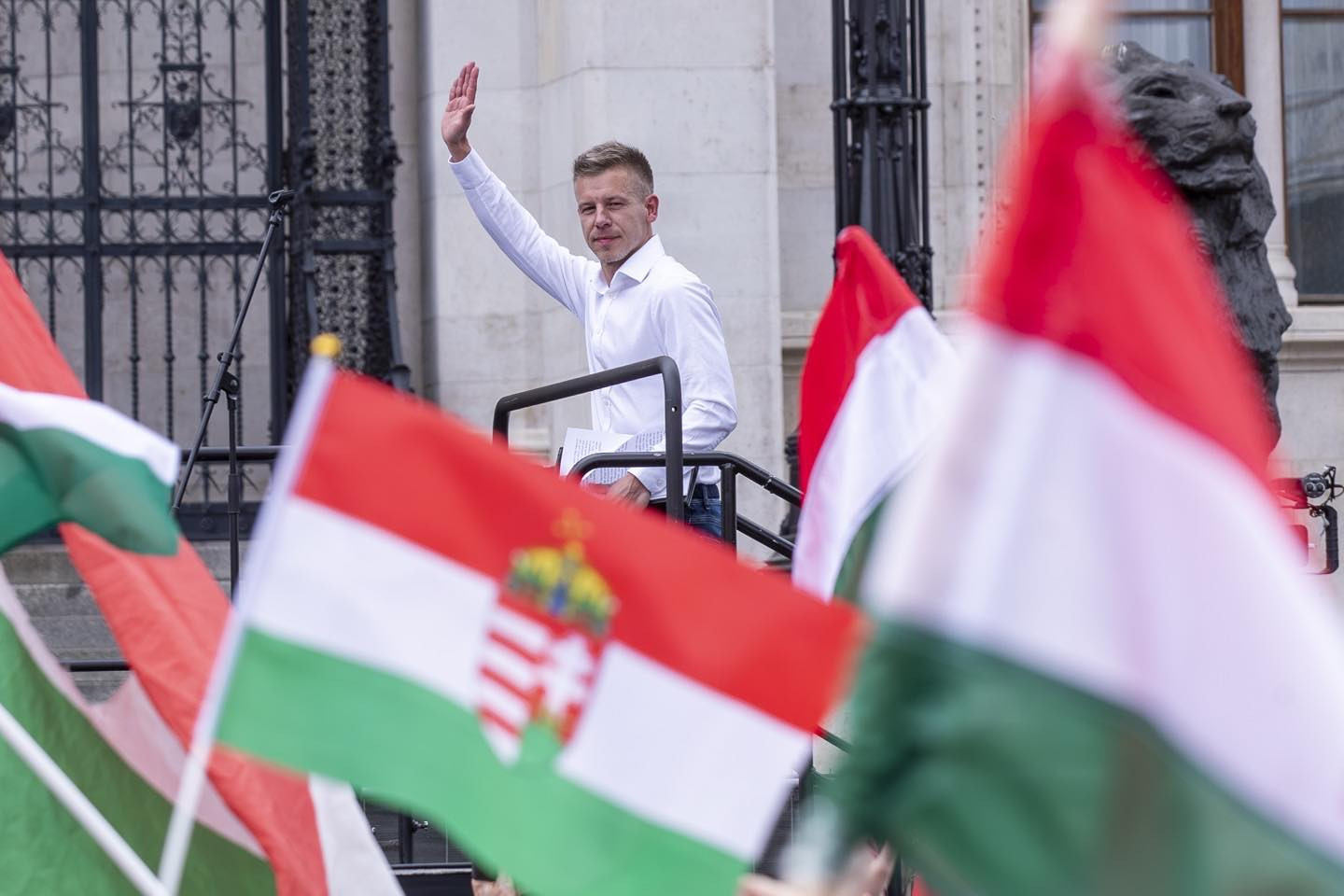
At the opening of parliament, the prime minister spoke about how the voters had not only changed the country, but also changed him. I, too, think he has gone through a profound transformation. We no longer need to have any doubts that he will use this astonishing social mandate and this power to bring about an irreversible democratic turn in Hungary.
Is there anything in Tisza’s work so far, or in the events around the formation of the government, that you view critically?
Honestly, I cannot name anything. No one should expect me not to be critical when needed, but as I listened to the committee hearings, I was impressed by how clearly the members of the government see the problems and how sincerely committed they are to solving them. Even if I look very hard, I do not see what they should have worded differently. Over the past 16 years Hungary set off in an extremely wrong direction; we are coming back from minus, and it is a pleasure to hear that we have embarked on a public policy path on which, apart from the former government, there is a consensus in Hungarian society.
It may sound immodest, but the fact that these public policy proposals are considered so important is partly due to the local politics of the last six years and to the largest municipality, Budapest. In many areas we went against the government’s policies, symbolically, but often also practically, which showed that we were representing the right direction.
With regard to Budapest, what is the most important issue that should be fixed first with the new government?
Unfortunately, the finances. For local governments, the last six years of the damage done over the past 16 years were a nightmare. It is not only Budapest that has ended up in a difficult situation; I also want to help my fellow mayors in the countryside. There are several cities that are in a critical situation; it is just that Budapest has received more attention. If I add up the burdens of Covid, the energy crisis, inflation, and the political austerity measures, an incomprehensible amount of funding was withdrawn, which was partly the result of deliberate political decisions. We are rolling forward a debt that will certainly take five years to work off.
But there are immediate steps that can preserve the city’s solvency. It was encouraging to hear the words of the minister responsible for local governments that this must be done quickly. We will submit proposals for this. We know that the budget is in a terribly difficult situation, so we will formulate our demands with restraint.
Thinking a bit more long term: as early as 2019 I proposed adopting a Budapest Act. This is important because the Hungarian system of local government needs to be re‑regulated, but Budapest is in a special position. For thirty‑five years we have been rolling ahead a whole series of unresolved financing issues. And for major development concepts, Budapest’s long‑term strategies must be aligned with the metropolitan area and the wider region. We are in the fortunate position that my former rival and at the same time ally, Dávid Vitézy, has become minister for investments, he knows these projects very well, and we understand each other when it comes to public policy issues [Vitézy is a Hungarian transport policy expert and former Budapest mayoral challenger, long regarded as politically close to Fidesz circles, but respected across party lines for urban transport expertise].
But you also had some quite serious disputes within the municipality itself. Will this work better now that he will be sitting in the government?
As one journalist put it, the wooden‑sword duel between Karácsony and Vitézy is finally over. Our disputes were about personnel and power issues, but there was more we agreed on. If we look at the big issues, such as the Rákosrendező development, which I think is also among the cases that contributed to the fall of the Orbán government, and into which the capital, with the support of Tisza and Dávid Vitézy, bravely stepped, there was no disagreement between us on these. The power struggle went on because there were two fiddlers in one inn. Now everyone is in their own domain.
I see a huge opportunity for Hungarian transport policy and for the development of Budapest in the fact that Dávid is taking this portfolio. The damage done in these areas has been astonishing. Hungarian public services are in a terrible state, due both to incompetence and to political value choices. In terms of motorways we are a great power, which of course has value, but meanwhile the development of the rural road network has completely fallen by the wayside, and the railways are on the verge of collapse. Working off this debt will take many years. But if anyone can bring about a turnaround here, it is Dávid Vitézy.
Have you coordinated since he became a minister‑designate?
Yes. For years we have been trying to find a solution to the issue of the giant billboards flooding Budapest. The government twisted the tools out of our hands, which is why Budapest’s historic city centre has been inundated with billboards. We have already discussed this at expert level; it does not even cost money. Even more important are the EU funds. Budapest has a great many projects that can help ensure we do not lose resources. If this political shift had come a year earlier, we would not now have to worry about losing the money from the Recovery Fund.
In recent days, together with his colleagues, Magyar has been giving guided tours of the ministry buildings in Buda Castle that were rebuilt or refurbished at enormous cost, and which they do not wish to keep in this function. Does the city have ideas about what could be done with these buildings?
This is a very difficult question. If there is any damage that cries to heaven, both from an urbanistic point of view and in terms of the efficient use of public funds, it is the government’s move into the Castle. In itself, the fact that the government is up in the Castle sends an incredibly bad message. Kings were in the Castle, then the leadership of the Horthy era. The centre of a 21st‑century, service‑oriented state cannot be in the Castle. The Castle should be a cultural and tourist stronghold; perhaps I could imagine the president of the republic and the Constitutional Court being located there.
We do not know the exact figures, but the whole project cost around 800 billion forints (€2bn), and it includes buildings without a conceived function. Behind this was the political intention of Viktor Orbán to draw, at taxpayers’ expense, a line of political continuity that does not exist. These buildings did not exist in this form either. This is political time travel and an urban madness. I can imagine cultural institutions there, but these buildings were not constructed for that purpose. Taxpayers’ money was squandered here. A public debate needs to be opened on this. They are certainly not suitable for ministries. I have not been inside any of them yet.
But now we have been able to see them from the inside.
The prime minister was absolutely right to show them. This money was taken away from Budapest as well – you can compare the state of the road network with these buildings. The solidarity tax with which we were hit did not amount, over five years, to as much as these buildings cost. This is a kind of power hubris that is incomprehensible. I could imagine these buildings much better even as hotels than as ministries [the solidarity tax is a redistributive mechanism through which Hungary’s central government reallocates revenue from wealthier municipalities, especially Budapest, but pposition-run cities argued the system became politically punitive under Fidesz].
It has also been suggested that, after Tisza’s landslide victory, early local elections should be held in Hungary. What is your position on this?
I don’t think this is Tisza’s idea; the prime minister has denied it as well. I have only heard it from Fidesz mayors who are afraid for their power. I consider it a nonsensical proposal, completely at odds with the policy the people of Tisza have articulated so far, and in my view with the Charter of Fundamental Rights as well. We are talking about directly elected politicians, not puppets appointed by those in power.
Tisza’s victory has redrawn the political map in Hungary and wiped out the old opposition parties, from which you yourself also came. How can Hungarian politics renew itself? Can the old opposition parties return, or will new parties emerge?
This is an important question. A well‑functioning democracy cannot exist without an opposition, and I do not think Fidesz can fulfil the role of an opposition. The reactions of Fidesz politicians suggest they have understood nothing of what has happened to them. Nor do I wish Hungary to have Fidesz as a significant actor even from opposition, not to mention Mi Hazánk. What has happened in Hungary has several components. The electoral system set up by Viktor Orbán was the main pillar of his power. It has now essentially collapsed back onto Viktor Orbán himself. This was partly because Fidesz suppressed so much social energy over the past sixteen years that it all burst out at once.
On the other hand, Fidesz can curse itself, because if they had created a proportional electoral system, this would not have been a crushing defeat for them. A disproportionate electoral system is a double‑edged sword. How was Tisza able to win? In the past, voters tried having different parties run separately against Fidesz; that way it was impossible to win. In 2022 they tried the various opposition parties joining forces, but even then victory proved impossible. The alliance was not credible, and there were many other problems; the outbreak of the war also contributed to the defeat.
Voters learned that without a single strong opposition party, Fidesz cannot be unseated. Partly, Fidesz’s internal dynamics also created a new political situation. Some Fidesz politicians interpret this as a party split, which is an exaggeration, because there are liberal and progressive figures in Tisza as well.
Another important aspect is that the left is in crisis across Europe, and especially in Central Europe, because of the socialist past. The left is searching for its place: just look at the British Labour Party; the German Social Democrats have not been this weak for a hundred years. The answers that left‑wing parties give on balancing capital and labour are completely unusable in a globalised world. Capital is global, and you cannot represent labour against global capital at the level of the nation state. That is why, in my view, only a system‑critical left has a future. The old parties have no chance of fulfilling this role.
This is a painful analysis, because many good people worked in these parties. But something very new has to emerge, and all I can do is root for that. It will be a long and painful process before a form of left‑wing thinking develops that is also socially viable. There are no genuinely left‑wing parties in neighbouring countries either; this is just the kind of era we are in.
So you expect that completely new actors will have to emerge for Tisza to have an effective opposition?
Yes. If there is to be a left in Hungary again, it will be built by people I do not yet know. Because they will be that new. But I do not really see this happening in the short term. There are some very likeable left‑wing movements, but they are not really finding a connection with the social majority. It is like when you wallpaper a flat and then go looking for the socket.
Do you still see a future for yourself in national politics?
No. I see the future of Budapest, and within that my own task. Before the 2022 parliamentary election, when the idea arose – primarily in others, and therefore eventually in me as well – that I should run as a candidate for prime minister in the general election, and then I withdrew, that was when I gave up this ambition. There are several reasons for this. One is personal. Being mayor of Budapest is a fantastic thing, and I do not wish for more than that. And the 2026 election also has an important lesson. Budapest is a big city in a relatively small country. The capital’s population is not homogeneous, and I do not like setting Budapest against the countryside, but Budapest is nonetheless different from the country as a whole. And if someone pursues a legitimate, values‑based politics as mayor, that closes certain doors to them when it comes to appealing to the majority in the countryside.
A good example of this was the Pride issue, which I think greatly contributed to Viktor Orbán being stripped of his aura. It could work because the Tisza party stayed completely out of it. Budapest, however, sent a message to the whole world, including the Hungarian countryside, that Viktor Orbán had become ridiculous. Orbán came up with the banning of Pride in order to force Tisza off the path of appealing to rural voters. If he had swept Tisza into the current of mainstream progressive politics, it would not have been able to win the election. There was a proper division of labour between us there. I did what I had to do as mayor, and Péter Magyar did not walk into this trap.
In the most recent local elections, Tisza did not yet field a mayoral candidate for Budapest, but that could change next time. Can you imagine running for mayor with Tisza’s support? Or rather against a Tisza candidate?
That is still a very long way off. Both are possible. In this term, after seven lean years, I would finally like to launch substantial developments. On the road towards 2029 I will have to decide about another term; this is still very fluid. I am interested in ensuring that three years from now, when that election takes place, Tisza still has a very strong, popular government that retains its social support. Even if that might present a personal challenge for me in the election. But that would be about democracy working. And that is more important than what happens to me in 2029.
We are here at the Bratislava conference of the Free Cities Alliance. I assume many people are asking you what has happened in Hungary and what significance it has for the region. What do you say on such occasions?
Everyone was very happy about the developments, and they are very curious. We created the Alliance in Budapest together with Matúš Vallo, Warsaw mayor Rafał Trzaskowski and former Prague mayor Zdeněk Hřib, who has since returned to national politics. The alliance has taken an interesting path, because originally we set it up to support one another as four Visegrad mayors pursuing progressive, European politics against populist governments. Politics has changed a lot since then. When the alliance started to expand, others joined us out of solidarity. Now, however, they want to learn from us.
This is bad news in the sense that democracy is in trouble all over the world. In my view the reason is that within the framework of nation states it is extremely difficult to respond to the social tensions of a globalised world. If the challenges are globalised, the responses must be globalised too. Now 10 major American cities are joining us. It is an important development that cities are thinking in terms of a sort of global network about the sustainability of democracy. It is of inestimable significance that Viktor Orbán did not simply lose, but that his system collapsed. He created a franchise. Just look at who came to Hungary during the campaign and how they positioned Orbán in the illiberal world. That is why his defeat is a major challenge to illiberal politics as a whole.
At the same time, when I talk to our European and American friends, everyone is very worried. They worry about what will happen in Great Britain or France. Something has gone off the rails, and the current form of globalisation is devouring democracy. Either democracy will humanise globalisation, or globalisation will destroy democracy. Hungary has just scored an important victory, but that still does not provide answers to these big questions. National introversion and nationalist politics are only a fever reducer, not a solution.
Budapest was one of the main centres of this change in Hungary. When people ask how you managed to withstand Orbán’s politics for 16 years, what is your answer?
I do not wish to dispute the astonishing political achievement of Péter Magyar and the Tisza party. What I am saying only nuances this picture. I believe Budapest was necessary for all of this. Not only because this is where the opposition had the most supporters. That was already true in the previous election, and yet the opposition lost. The democratic commitments of society, the belief in social cohesion, were able to survive and return to national politics because there was a place where those exercising public authority built their politics on this. They had a role in keeping this flame alive. Last year’s Budapest Pride was the symbol of this. It was something people could really feel.
But it was not only about that. When I listen to the ministers now, they list topics that we have been advocating over the past six years. It is not very witty, what I say, but when European city leaders ask me this, I answer that you have to hold out. Over the past six years I was prepared to go to prison over Pride, or to go to court over the city being bled dry, or to endure the smear campaigns poured over me, and even the unlawful house searches that affected my colleagues.
The most important thing is to avoid falling into Stockholm syndrome when a tyrant is running the country. You do not have to come to terms with him; you have to maintain your inner commitment. If you do not fit into the system, voters will understand what is happening. When, in protest, we stopped public transport in Budapest for 10 minutes, I thought it would be one of my least popular measures. In fact, it became one of the most popular.
It is worth using very strong gestures to communicate what is happening in the city. This was one of the foundations of the political victory that has taken place. And let me stress once again: this is not about me wanting to buy shares in a successful start‑up. I am only saying that this was necessary to preserve the resilience of Hungarian democracy. An important lesson is that when we talk about the need for the EU to support cities, we are not only talking about urban policy, but also about preserving democratic self‑defence capacity.

 Zoltan Szalay