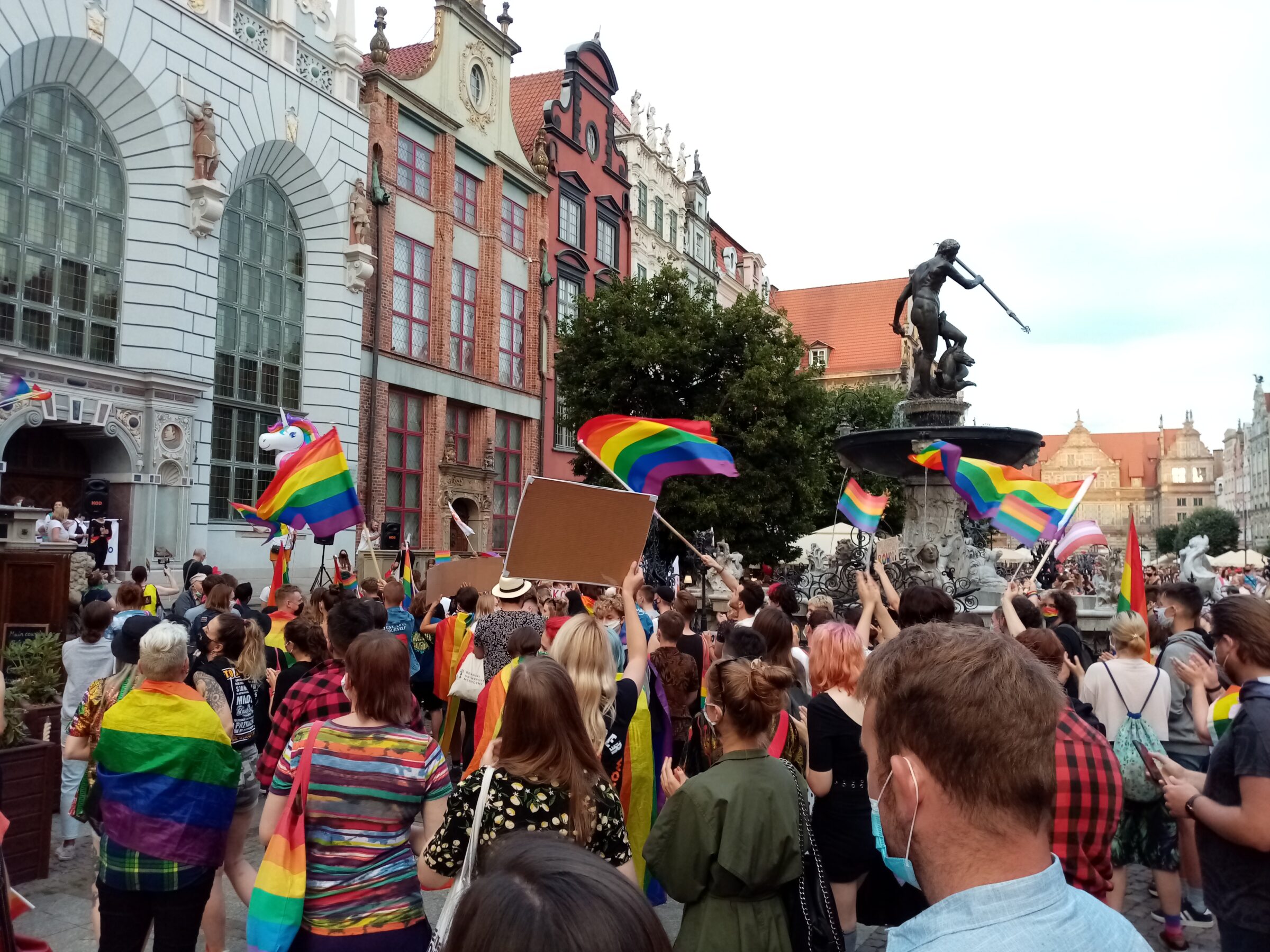
As Poland faces mounting pressure to recognise same-sex marriages registered in the EU, one young activist from Warsaw tells EUobserver how conservative forces are trying to resist reform.
A landmark ruling by the EU Court of Justice in Luxembourg on 25 November 2025 said Warsaw’s refusal to register foreign marriage certificates violated the bloc’s rules on freedom of movement.
And the case, brought by two Polish men married in Germany, has become a test of LGBTQ+ rights in Poland, has exposed the clash between European law, domestic bureaucracy, and a government struggling to balance promises of social reform with resistance from conservative forces.
But human rights advocate Mateusz Trzaska, from the Warsaw-based group Campaign Against Homophobia (KPH) warns that, while there is reason to celebrate, progress is far from guaranteed.

EUobserver: Why was Poland first put before the EU courts on gay marriage?
Trzaska: The Court of Justice of the European Union, the CJEU, was answering the preliminary question sent by our National Supreme Administrative Court with questions on how the court should interpret European law. There was a case where two men, Jakub and Mateusz, sued the decision of a city clerk on not transferring their marriage certificate from Germany into the Polish system.
The [Polish] case started years ago [in 2019] and the final ruling from the EU’s top court was in November 2025. The ruling said that the Polish law which prohibits transferring same-sex marriage certificates into the Polish system stands in the way of the freedom of people moving inside the European Union.
What are the legal complexities of transferring EU marriage licences into Polish ones?
Until now, the Polish system was made to recognise only different-sex partners in marriage. On the certificates you had only one option to answer who was wed : one male and one female and that was it. So it was tricky for the system to get the gay-marriage certificate translated as you couldn’t get legally married if you were two men or two women.
When same-sex couples were trying to make accept their foreign marriage certificate in Poland, the information on the clerk’s computer could not be taken into the system. It is because when you give your national identification number, the ‘PESEL’ in Polish, there’s a gender marker in the code. When same-sex couples wanted to put two males or two females, the system was highlighting it in red and the administration couldn’t proceed further with the request.
The legal system is ‘handy’ for us now because the bill says that marriage certificates have to use a gender-neutral word for spouses. In that sense, there is a way to transfer the marriage certificate [from other countries].
Are the changes already applicable?
Not yet. The National Supreme Court reviewing the case of Mateusz and Jakub handed out the preliminary questions to the CJEU which made a ruling on November 25 last year. On March 20 this year, the National Supreme Court issued their ruling based on those answers received from the CJEU.
Now we know that Poland should guarantee the possibility of transferring marriage licences into the Polish system within the European Union. The head of the civil registry has 30 days to register the marriage certificate. The 30-day period started on Friday, because it took some time after March 20 to transfer all the case files back to the civil registry. Now, the head of the civil registry in Warsaw must register Mateusz and Jakub’s marriage certificate in the Polish system.
How many people are directly impacted by this legislation?
We couldn’t say exactly how many same-sex couples who got married abroad have tried to have their marriages registered in the Polish system. It is a very lengthy process. Even the case of Mateusz and Jakub began in 2019.
Between March 20 and now, we have received six additional rulings from the Supreme Administrative Court. Just last Thursday, the Court issued three rulings in a single day concerning three more couples.
We are also seeing regional administrative courts begin to follow the CJEU ruling and the Supreme Administrative Court’s ruling by ordering civil registry offices to register foreign marriage certificates in the Polish system.
Are these rulings and the CJEU’s intervention a step toward formal recognition of same-sex marriage in Poland?
Of course! It’s a really important day and a major moment of celebration for the community. There is a sense that this is a right we have finally secured, even if couples still need to get married abroad before having those marriages recognised here in Poland. It is a significant step forward.
This also shows that it is not simply a matter of political goodwill — politicians have a responsibility to ensure that our rights are actually implemented.
There is still an ongoing debate about what it will look like when the first same-sex couple is officially registered. Poland is governed by a broad coalition, and in the more left-leaning ministries we are seeing bolder and more proactive efforts to find ways to implement the ruling in practice.
What we still do not know is what being registered as married will actually mean for these couples in legal and institutional terms. So far, only the Social Security Institution has stated that same-sex marriages will receive the same coverage as different-sex marriages. That is a major victory, but much more will need to happen after the ruling than simply being able to say: ‘You are now married’.
There will likely be many further disputes with public institutions, and at KPA we are trying to monitor the situation closely and provide people with a clear understanding of what has already been achieved and what still remains to be accomplished.
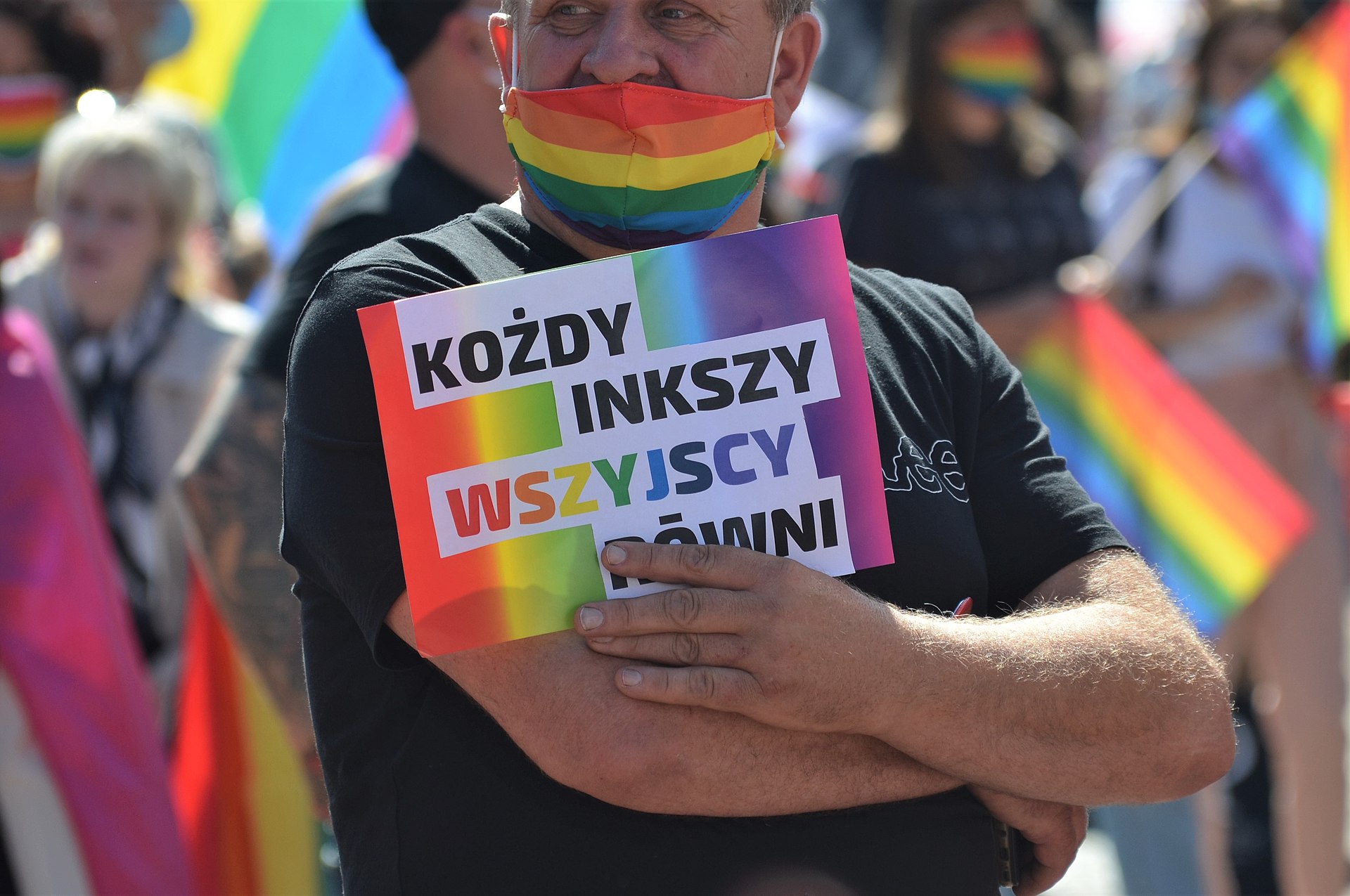
Where does Poland stand now where LGBTQ+ rights are concerned?
This is really hard to say. From one perspective, we are faced with a more inclusive government that tried to get civil partnerships passed and said that in the first 100 days, they will pass civil partnerships so the dignity of LGBTQ+ people will be protected. We see that that wasn’t entirely true. We see that left party politicians are engaged in processes to make sure that couples are protected.
On the other side, from the other side of the coalitions, the Civil Coalition, the politicians are mostly saying that those rulings [from the CJEU] only impact same-sex couples and that we need a lot of those rulings to make a precedent.
In other words, we have to see what will happen. There is just this bit of uncertainty in the ruling coalition right now over LGBTQ+ issues. There is a lot of concern that the bill is nothing more than empty promises wrapped in nice packaging.
When Polish prime minister Donald Tusk was running for elections in 2023, where were LGBTQ+ rights in his agenda?



 Why AI-turbocharged misogyny and porn is a threat to EU democracy
 Petra Pavlovičová