On Saturday, the US and Israel launched “major combat operations” against Iran. By Sunday, supreme leader ayatollah Ali Khamenei was confirmed dead, retaliatory strikes were hitting Gulf states and Israel, and Tehran had formed a temporary leadership council.
Trump called on Iranians to “take over your government” once the bombing ends. Netanyahu urged them to “cast off the yoke of tyranny.”
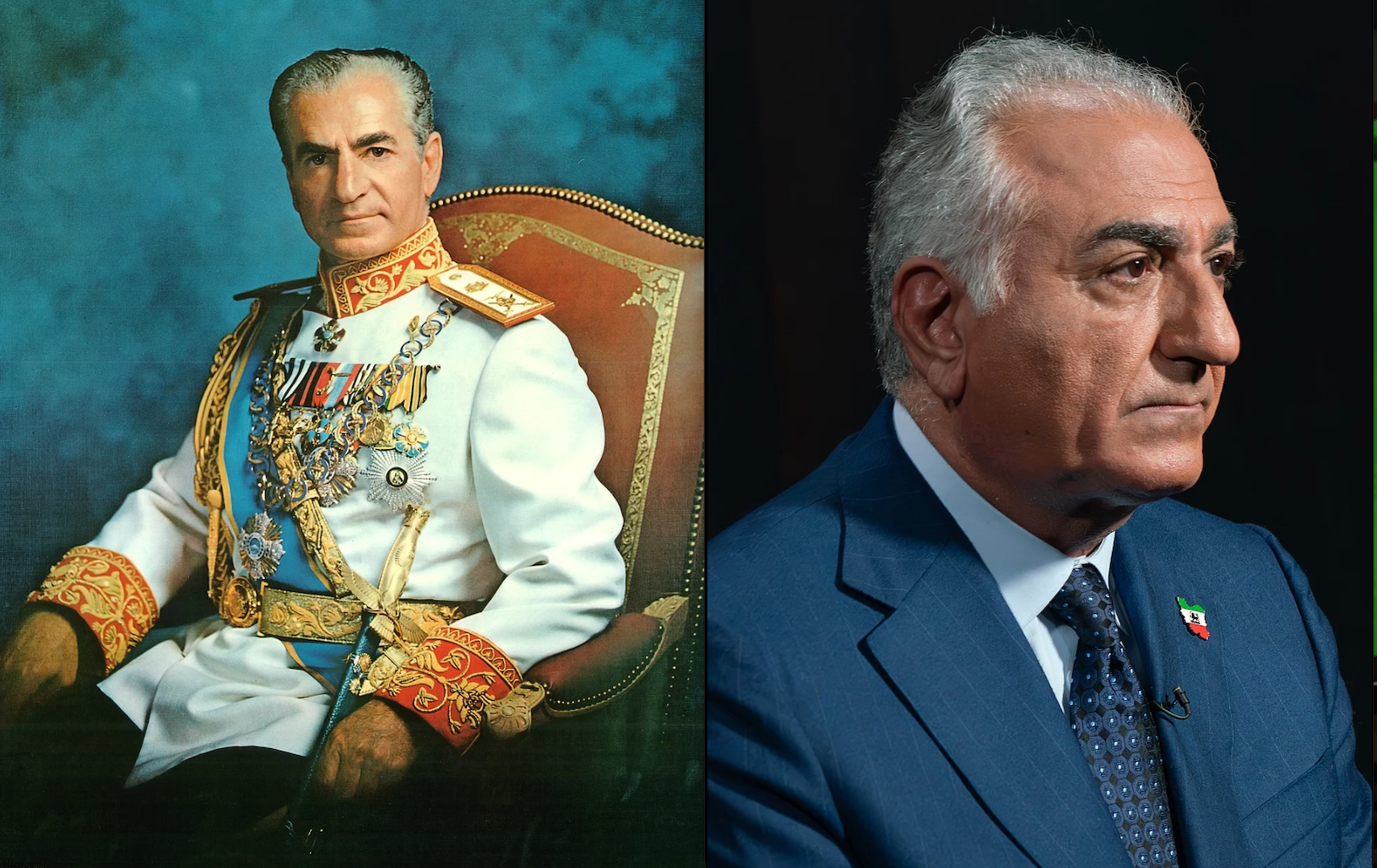
Within hours of the first strikes, exiled crown prince Reza Pahlavi, the son of the shah restored to power by the CIA-MI6 coup of 1953, issued a prerecorded statement calling the operation “humanitarian intervention” and telling Iranians to prepare to return to the streets.
The symmetry is not coincidental. It is structural. Europe, which co-authored the original script, should understand where it leads. Iran’s present cannot be understood without revisiting 1953, when democracy, nationalism, and foreign power collided.
Rewind to 1953, and a CIA and MI6 plot
In the early 1950s, Iran had a constitutional monarchy, a functioning parliament, and competitive politics.
Prime minister Mohammad Mossadegh nationalised Iran’s oil sector. His grievance was concrete: the Anglo-Iranian Oil Company — predecessor to BP — reported 1947 profits of £40m [€45.5m] while paying Iran roughly £7m.
When Mossadegh nationalised through parliamentary mechanisms, the UK responded with subversion. The stated rationale was Cold War logic.
Yet as historian Ervand Abrahamian documented from declassified archives, there was no evidence of imminent communist takeover. The real issue was control of oil and the precedent Iran might set.
On 19 August 1953, Operation Ajax, coordinated by the CIA and Britain’s MI6, a transatlantic operation with European fingerprints from the start, used bribes, propaganda, paid mobs, and clerical manipulation to overthrow Iran’s elected government.
As the CIA itself acknowledged in 2013, the agency played the central role.
What followed was authoritarian modernisation atop systematic repression. The Shah eliminated independent political organisation. By the mid-1970s, Amnesty International identified the regime as among the world’s worst human rights violators.
The 1979 revolution
When peaceful politics are foreclosed, radical alternatives fill the vacuum.
The 1979 revolution drew on a broad coalition — students, workers, liberals, leftists, clerics. As political scientist Charles Kurzman documented, the outcome was contingent, not inevitable — yet it unfolded within constraints shaped by the 1953 intervention.
The causal chain is evident: short-term stability purchased through intervention destroyed long-term legitimacy. The revolution had its own internal dynamics — but the 1953 coup shaped the field within which those dynamics played out.
The Islamic Republic emerged not despite Western intervention but partly because of it.
The regime that resulted is brutal, repressive, and a threat to its neighbours — but understanding how it came to power explains why external coercion so consistently strengthens the very apparatus Europe wants weakened.
Europe’s blind spot
The EU response follows a familiar pattern.
The strikes come amid real tensions over Iran’s nuclear programme and regional proxy posture — but the historical pattern holds. EU foreign policy chief Kaja Kallas called Khamenei’s death a “defining moment” while describing the conflict as “perilous.”
The E3 (France, Germany, and the United Kingdom) condemned Iran’s retaliatory strikes but stopped short of condemning the operation, stating that “the Iranian people must be allowed to determine their future.”
Meanwhile, two Iranian ballistic missiles were fired in the direction of Cyprus, an EU member state hosting British military bases.
The conflict Europe did not choose is already arriving on European soil.
Allies have been notified, but not consulted. Consulted about what, exactly? As Anne Applebaum has noted, the operation was launched without a coherent strategy for the Iranian people and without a plan for what comes next.
This follows a decade of strategic drift on Iran.
After Trump withdrew from the Joint Comprehensive Plan of Action in 2018, the E3 sought to preserve the agreement but failed, accepting Iran’s disconnection from the SWIFT international payments system, and conceding to US sanctions.
In January 2026, the EU designated the Iranian Revolutionary Guard Corps as a terrorist organisation — rightfully so — a move Chatham House described as “the collapse of a core assumption in European Iran policy.”
The 1953 pattern illustrates a dynamic Europe should recognise: interventions that privilege control over legitimacy produce regimes that are more coercive and hostile to external influence.
Today, with the supreme leader dead and the son of the CIA-installed shah coordinating with Washington on what comes next, Europe faces the question it has avoided for seven decades.
It can continue absorbing the consequences of American decisions it neither shapes nor challenges.
Or it can recognise what 1953 should have taught: that Iranians want sovereignty, dignity, and the right to choose their future.
External force has rarely delivered it — and never in Iran’s case.
That means pressing for International Atomic Energy Agency (IAEA) access, maintaining independent diplomatic channels, and keeping a critical distance from a regime-change framework whose historical record Europe, of all actors, should know best.


 ‘Have you eaten today?’ What an incident on an Italian train taught me about EU values