“At the beginning of the full-scale war, we were most afraid of artillery,” says Vasyl Barninets, a manager at a large grain farm in the Zaporizhzhia region in southern Ukraine.
“Now, the biggest fear is the drones.”
“If we work close to the frontline, the staff have to put on bulletproof vests,” he continues. “Guys with rifles — hunters — also go with them. When they see an FPV [first-person-view] drone, they try to shoot it down, but it’s not always possible.”
Barninets’ workplace is just 10km away from the frontline.
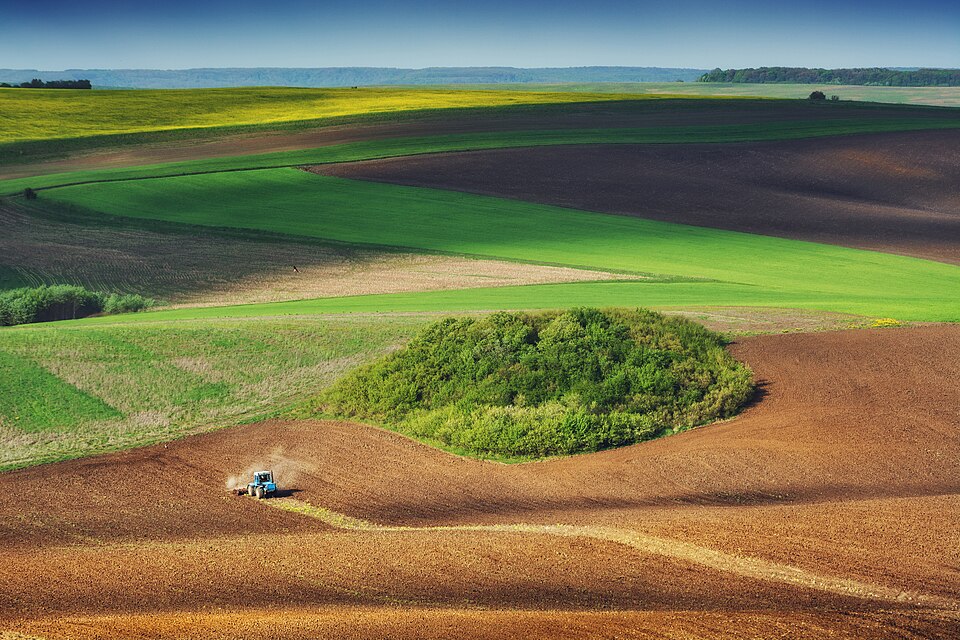
Before the full-scale war, the company could harvest on 19,000 hectares of land, but now, only 13,000 remain — the rest is under Russian occupation or on the frontline.
The farm suffered major losses in 2022 when the warehouses with grain and fertilisers were destroyed. Equipment was also damaged. In 2025, a Russian drone burned down a seven-hectare field, and one of the employees was injured.
The story of Barninets is not unusual for Ukraine.
The country’s agricultural sector is operating under conditions unprecedented in modern Europe.
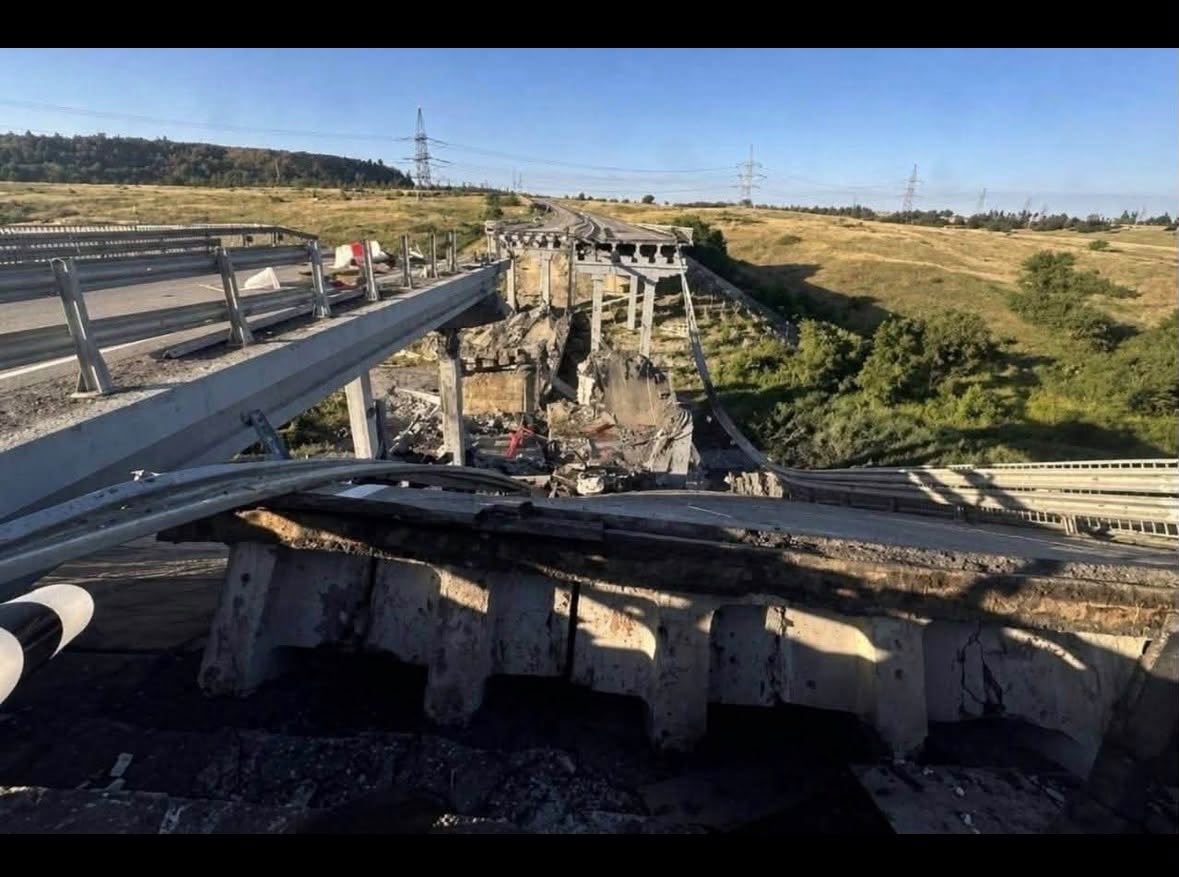
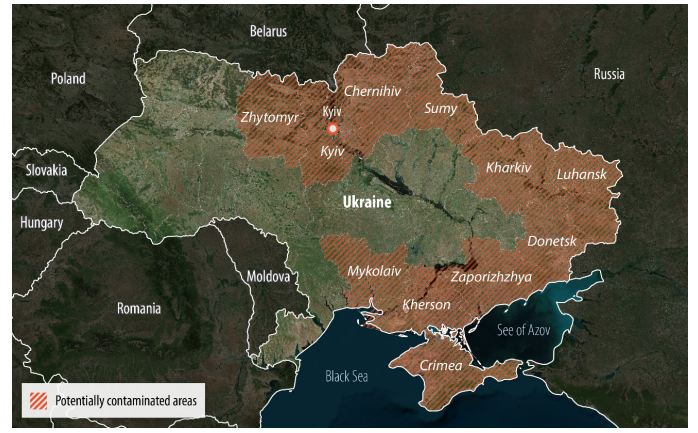
Nearly four years into Russia’s full-scale invasion, vast areas of farmland remain mined or contaminated, irrigation systems lie in ruins, and farmers and their teams work under constant threat of missile and drone attacks.
According to Ukrainian government estimates, around two million hectares of arable land — an area roughly the size of Slovenia — are currently unsafe to cultivate due to landmines and contamination.
The war has sharply reduced Ukraine’s agricultural output, once among the world’s largest. Grain and industrial crop production fell from a record 106 million tonnes in 2021 to approximately 77 million tonnes by 2024, reflecting land losses, infrastructure destruction and disrupted logistics. Yet agriculture remains Ukraine’s economic backbone. Last year, farm exports generated nearly $23bn [€19.4bn], accounting for up to 60 percent of total export revenues in peak months.
As Black Sea routes were blocked or restricted, Ukraine redirected much of its agricultural trade westward.
Since 2023, around half of Ukrainian agricultural exports have flowed into the European Union, reshaping markets from the Baltic to the Mediterranean.
What began as an emergency lifeline for a country at war has evolved into a structural shift — one now testing political solidarity inside the EU.
In some EU countries, farmers have mobilised against Ukrainian imports, arguing that lower production costs and looser regulatory burdens give Kyiv an unfair competitive advantage.
Polish farmers have repeatedly blocked border crossings with Ukraine, demanding quotas, safeguards and tighter controls on agricultural imports.
This collision between wartime necessity and European market protection has turned Ukrainian agriculture into more than a domestic survival story.
It is now a central fault line in debates over EU enlargement, food security and the future of European farming itself.
Fields of conflict
For many Ukrainian producers, returning the land to productivity remains a test of endurance and ingenuity. Severe water shortages following the destruction of the Kakhovka dam in 2023 further compounded losses, costing hundreds of millions in damaged crops.
Still, Ukraine’s grain and oilseed exports remain essential to the EU’s food security strategy, especially after disruptions to Black Sea shipping. “Solidarity lanes” across central Europe were set up to ensure overland export flows, helping stabilise both European and global food systems.
Ukraine’s growing dependence on the European Union as an export destination has transformed what was initially an emergency trade arrangement into a structural challenge for the bloc.
For Brussels, the logic was initially straightforward: keeping Ukrainian exports flowing was essential to prevent a global food crisis and to stabilise Ukraine’s economy during wartime.
But as temporary measures stretched into years, tensions surfaced inside the EU’s own agricultural markets — particularly in countries geographically closest to Ukraine.
In Poland, farmers argue that Ukrainian products, produced at scale and under different cost structures, are too cheap compared with local producers.
Although Ukrainian producers face war-related risks that EU farmers do not, they operate outside the EU’s Common Agricultural Policy subsidy framework and environmental compliance costs.
In early 2024, Polish farming unions announced plans to block all freight transport between Poland and Ukraine, including roads, rail shipment points and port access. This was done as part of a month-long protest against exports of Ukrainian goods into the EU.
Polish agriculture minister Czesław Siekierski has publicly acknowledged farmers’ concerns, calling them “justified” and warning that quotas and trade controls may be needed. “There will be a blockade if there is too much of a particular product,” Siekierski said, noting that negotiations with Ukraine were underway to regulate sensitive items like grain, sugar, poultry and eggs.
Similar concerns have emerged elsewhere. French, Slovak and Hungarian agricultural unions have warned that sustained high volumes of Ukrainian imports could depress prices and undermine local producers already grappling with rising fuel costs, climate volatility and stricter EU environmental regulations.
In this sense, Ukrainian agriculture has become entangled in a much wider European debate: how to reconcile food security, climate goals and farmer incomes at a time of geopolitical instability.
Brussels has responded cautiously.
In 2025, it reinstated quotas on duty-free Ukrainian wheat and barley in response to pressure from farming unions across France, Poland and beyond — a move intended to shield local producers from sudden import surges.
Yet EU leaders insist that supporting Ukraine’s farm sector is critical for long-term food security and geopolitical stability. Balancing these priorities — solidarity with Ukraine and protection for European farmers — has become one of the bloc’s most sensitive policy challenges.
From battlefield to the battle for EU membership
The dispute over Ukrainian agricultural imports exposes structural vulnerabilities within the European farming system itself.
Many EU farmers feel squeezed between market liberalisation, climate-driven policy reforms under the Green Deal, and shrinking margins. In this environment, Ukraine’s vast and competitive agricultural sector is often perceived not as a partner, but as a too strong rival.
At the same time, Europe cannot easily disentangle Ukrainian agriculture from its own strategic interests.
Ukraine remains a critical supplier to global food markets, particularly for countries in the Middle East and Africa. Restricting its exports risks pushing prices upward and increasing global instability — outcomes the EU has sought to avoid since the start of the war.
This dual reality has turned Ukrainian farming into a test case for the EU’s capacity to manage enlargement in an era defined by crisis.
Integrating a country with tens of millions of hectares of arable land into the Common Agricultural Policy would require rethinking subsidy formulas, environmental standards and market protections — changes likely to provoke resistance well beyond Poland.
This would also be complex for Ukraine itself given the war challenges, security and economic issues, as well as shortages of land and human resources.
For Ukrainian farmers, the stakes are immediate and existential. War has destroyed land, infrastructure and predictability, yet expectations to align with EU standards continue to grow.
For European farmers, the fear is more gradual but no less potent: that enlargement and trade liberalisation could erode already fragile rural economies.
For entrepreneurs like Barninets, simply feeding a nation at war remains a daily struggle.
This article was produced as part of the Thematic Networks of PULSE, a European initiative that supports transnational journalistic collaborations. It was first published here.


 Russia is likely preparing for a massive autumn mobilisation of over a million soldiers (Ukraine Battlefield update, Day 1,589)