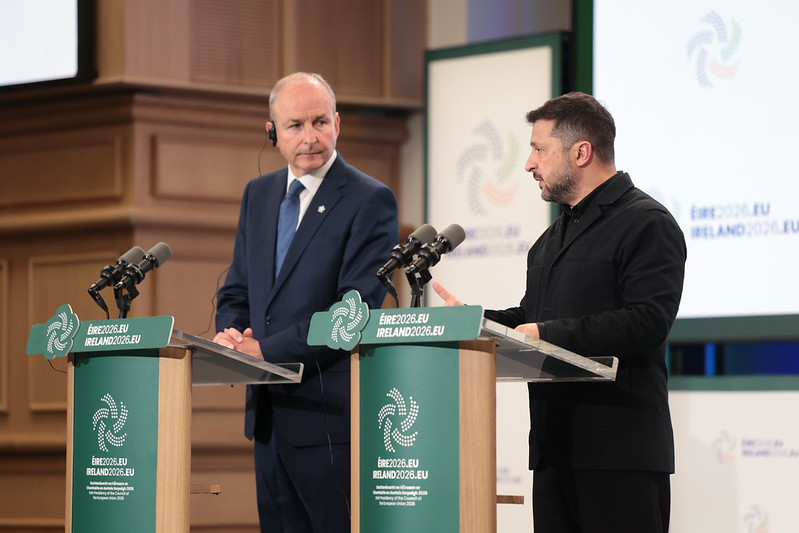
The six-month Irish EU Council presidency began on Wednesday (1 July) with a rebuke from Ukrainian president Volodymyr Zelensky, who slammed European companies that still have business with Russia, such as the Russian-owned Aughinish Alumina factory in Ireland.
At the historic Dublin Castle, speaking after EU Council president António Costa, Zelensky said that more could be done to pressure Russia and limit its aggression against Ukraine.
“Unfortunately, there are companies in Europe that are owned or effectively controlled by Russia and its sanctioned oligarchs. They keep supplying the Russians with essential materials even now,” he told the crowd of politicians, diplomats and journalists in the Irish capital.
“Every tonne of raw material that ends up in Russia is used against us in this war. We hope we won’t have to wait for a month,” Zelensky said, just a few hours before Russia launched another massive attack in Kyiv.
His remarks prompted a quick response from EU foreign affairs chief Kaja Kallas on Thursday, when she announced she would propose additional sanctions.
“I will propose to sanction more entities supporting Russia’s military-industrial complex in response to the strikes. The more Moscow attacks civilians, the more sanctions must be imposed,” she said on social media.
“Words of condemnation alone will not stop attacks on Kyiv. Only sustained military support for Ukraine and increased pressure on Moscow can do that,” she also said.
Alumina revelations
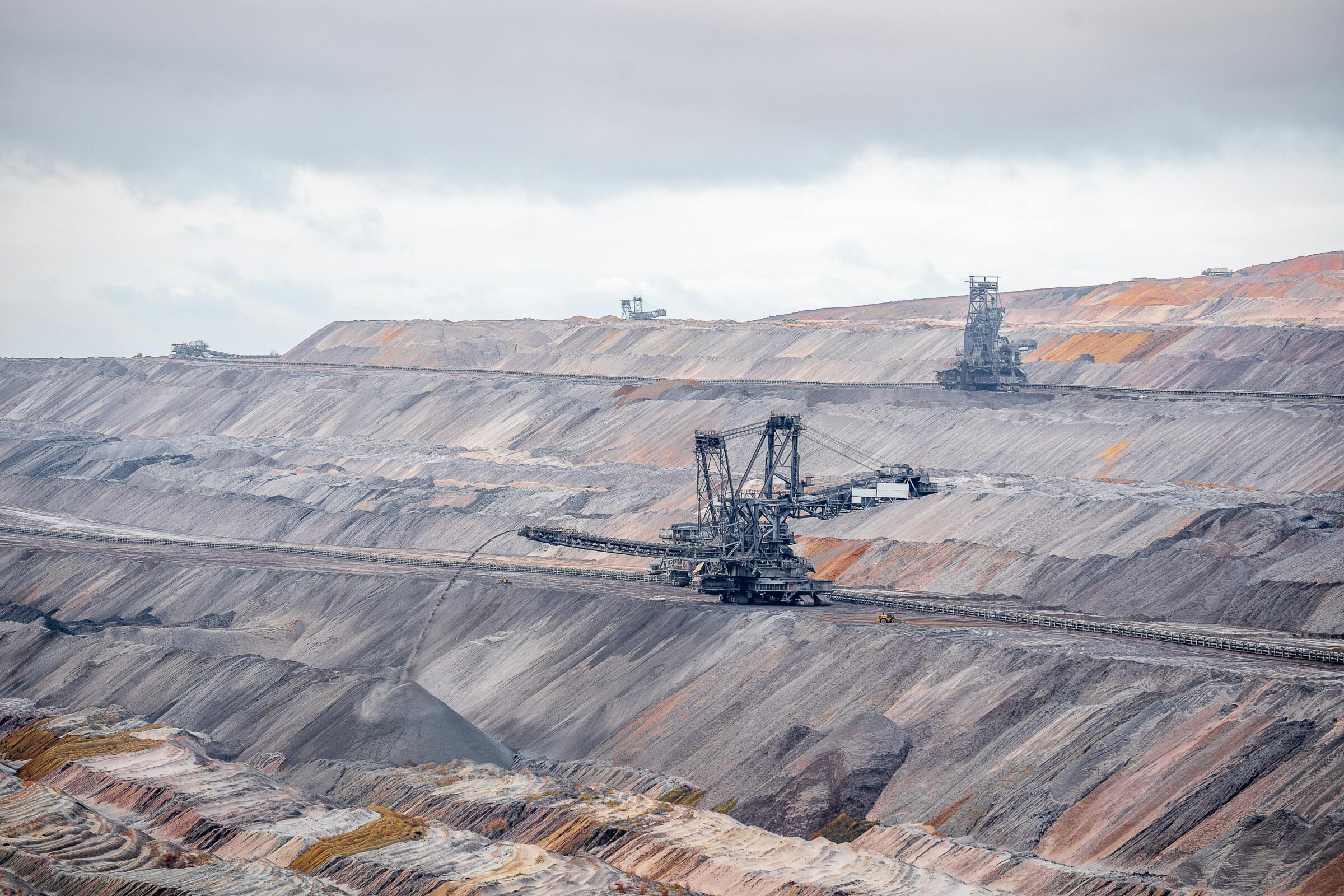
The Irish Alumina factory, located in County Limerick, has come under fire after an investigation by the Irish Times and OCCRP found earlier this year that exports to Russia were feeding the Kremlin’s war machine being used against Ukraine.
Aughinish Alumina refinery, owned by the Russian parent company United Company Rusal, has increased its exports to Russia since the full-scale invasion of Ukraine in 2022, the Irish Times and OCCRP revealed.
Rusal is controlled by Russian oligarch Oleg Deripaska, a billionaire ally of Vladimir Putin, under EU, UK and US sanctions for his ties to the Russian defence sector.
In 2024 alone, the refinery reportedly shipped around $400m [€350.3m] worth of alumina to two Russian smelters (Krasnoyarsk and Sayanogorsk), accounting for nearly 40 percent of their imported alumina.
While the EU banned exports of aluminium to Russia, alumina — a critical raw material used to produce aluminium — is not covered by sanctions, as it is part of global supply chains used in different sectors.
In contrast, other countries like Australia imposed a ban on all direct and indirect exports of alumina and related aluminium in response to Russia's full-scale invasion in 2022.
Aluminium is a light but strong metal used for fighter jets, drones, tanks or missiles.
Following the media revelations, the Irish government formally launched an investigation in June 2026, which is expected to come to an end in the upcoming weeks. And the Brussels executive is being updated on a weekly basis, Irish enterprise minister Peter Burke said in mid-June.
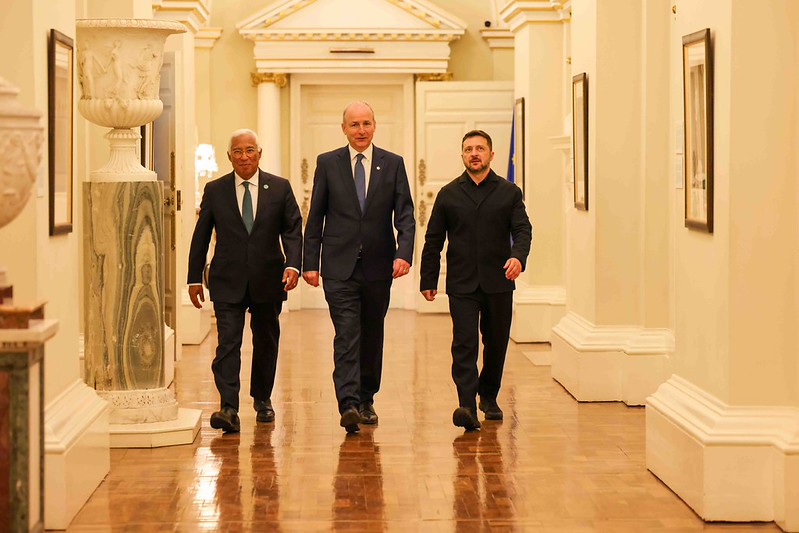
The issue of exports of alumina to Russia was part of Wednesday's bilateral meeting between Zelensky and Taoiseach Micheál Martin, after the opening ceremony of the Irish presidency.
Talking to journalists after the meeting, Martin said that the investigation will provide “full facts” which will then be brought to the European Commission for examination and discussion on next steps.
“We do not want to be in a position where material emanating from a plant in Ireland goes to support the Russian war machine,” Martin said on Wednesday.
Zelensky, for his part, said he is confident that efforts are being made to cut "every possibility for Russia to build up and militarise itself and our temporarily occupied territories”.
 Will Ireland’s diplomatic charm fix budget wars and Gaza trade row in next six months?

 Ukrainians no longer need expensive Western missiles to blow up bridges in Russian occupied territories (Ukraine Battlefield update, Day 1,589)
 Elena Sánchez Nicolás