Belgium has drawn a thin red line against illicit surveillance in the EU capital, in a trial that exposed the “creepy” modus operandi of a British private-eye firm.
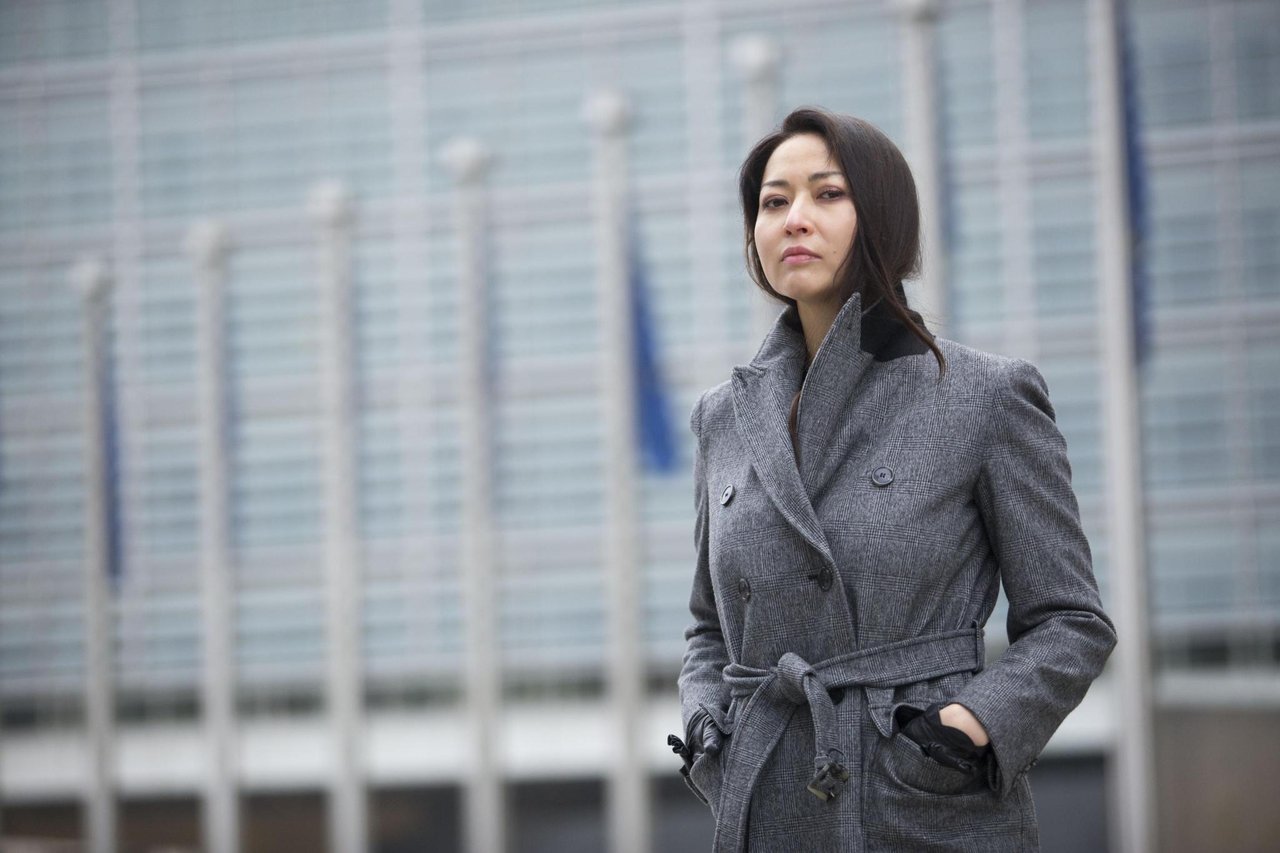
It was a rainy Saturday shortly after 4PM on 5 August 2017 in Place du Châtelain in Brussels, a trendy area popular with expats, when Bota Jardemalie, a now 48-year-old Kazakh lawyer and refugee living in Brussels, confronted the man whom she’d seen following her round town in a grey Renault.
“I suddenly felt so angry, I don’t know how I found the courage to do it, but it was a public place, with people around, so I ran over and took photos of him and his car on my phone. He hid his face and drove off, but he had some kind of military tattoo on his arm and this helped police to identify him,” she told EUobserver some eight years later, as the trial came to a close.
The man was Peter Botham, a now 44-year-old British ex-Royal Marine, who was born in South Africa and had served in Afghanistan and Iraq, and who’d been hired by the London-based private-intelligence firm Diligence to snoop on her on behalf of Kazakhstan’s BTA Bank, trial documents showed.
Jardemali had previously worked with Mukhtar Ablyazov, a Kazakh businessman, fugitive, and political activist, whom the authoritarian state’s bank has accused of embezzling billions of euros.
Belgium gave her political asylum in 2013.
Botham was charged with multiple infractions of Belgium’s 1991 law regulating private detectives and with harassment.
The wheels of Belgian justice turn slowly, as seen in his eight-year long trial, which was delayed by the Covid pandemic.
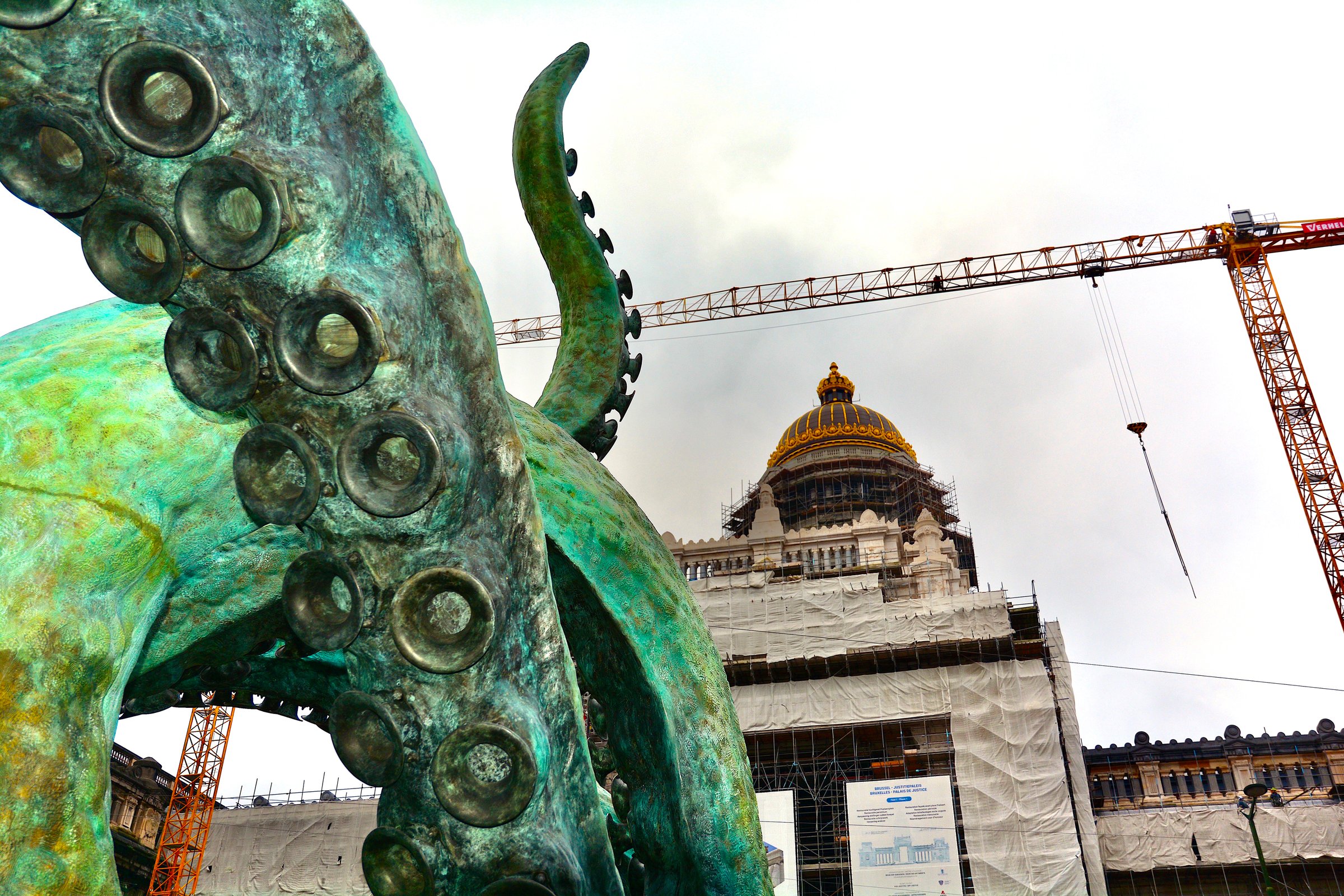
But on Thursday (30 January), a Belgian judge at the Palais de Justice court house in Brussels sentenced him, in absentia, to six months in prison and a symbolic €1 fine, in what Jardemalie’s lawyer, Ronit Knaller, called an “important precedent”, in terms of protecting people’s privacy and safety, in a city which hosts the EU and Nato HQs, as well as many politically-sensitive individuals drawn into the orbit of Europe’s powerhouse.
“The tentacles of the Kazakh regime reach very far … but it’s an important moment for people who’ve received asylum here to know that Belgium can protect you,” Knaller said, speaking at an earlier hearing on 17 December 2024.
Didier Francois, the head of Belgium’s private-detective trade association, the UPNDBP, also told this website: “We all know Brussels is home to many international institutions and that, after Dubai, it’s the most cosmopolitan city in the world, so it’s normal for foreign intelligence companies to have their attention focused here”.
“In the world we live in, the trend is on the rise, with the mobility of people and the need to be properly and quickly informed,” he said.
Francois, whose firm specialised in insurance fraud, has been working in the sector since 2004, and said he’d “never” heard of such a sentence being handed out.
Private-intelligence firms, such as Diligence, normally work in secrecy under non-disclosure agreements (NDAs) with clients, so it was hard to gauge the levels of foreign activity in Belgium, Francois added.
When Diligence director Trefor Williams communicated with a BTA Bank contact, Nurlan Nurgabylov, for instance, they tended to do it “sitting together” in person, instead of digitally, for the sake of “operational security”, according to two emails sent by Williams to Nurgabylov back in July 2014 on a related case outside Belgium, and seen by EUobserver.
“Given what’s happening with regards to other consultants … we would like to avoid being caught up in that legal nightmare [if exposed],” Williams, who is also ex-military, said in one message on 2 July 2014 (it’s unclear what “nightmare” he meant).
Rare insight
But for all the NDAs, the anti-Botham litigation, brought by Belgium’s federal prosecution service, gave a rare insight into how his company, and the sector more broadly, operated.
And if being spied on by Kazakhstan sounds sinister, then Britain’s security minister, Dan Jarvis, felt it necessary to warn UK contractors on 22 January that if they spied on dissidents for even more dangerous clients, such as Russia, China, or Iran, they faced up to 14 years behind bars.
Meanwhile, under Belgian law, if a foreign company wants to do surveillance, they have to obtain a permit from the interior ministry and to be supervised by a registered Belgian private-eye firm.
All private eyes are forbidden to snoop on people for political or religious motives, or because of their sexual orientation.
They’re barred from filming or photographing people without their consent, especially in non-public places, and from following their relatives, especially minors.
They’re also blocked from putting electronic tracing tags on targets’ cars and from sifting through their private garbage.
But Botham came and went from London to Brussels on the Eurostar to do his job without asking anyone’s permission, trial documents showed.
He broke almost every law in the Belgian book on behalf of Diligence and BTA Bank, according to the police files.
And he was not the only one who played fast and loose with the rules, according to a second Belgian private eye, who asked not to be named.
“The [1991] law forbids almost everything we need to do in order to be effective, but everyone does it anyway,” the Belgian sleuth told this website.
Botham, for instance, hired an apartment facing Jardemalie’s home in the Uccle district in Brussels, just a few kilometres from the EU institutions, in order to take some of the 1,071 “relevant” photos found by Belgian police on his devices, which they later showed her.
“I remember one of the pics, which was so creepy,” she told EUobserver.
“It showed me standing by my window, gazing out, and everything deep into my apartment. There were other photos of me drinking water in my kitchen – so detailed that you could see the drops of water on my mouth,” she said.
“I was very lucky I have a habit of closing my curtains when I turn on the electricity … so, at night, I was not in a fishbowl,” Jardemalie added.
“I don’t know what they were looking for – something to use against me, and it was all happening about the same time that Kazakhstan kidnapped my brother and tortured him in prison in order to blackmail me to go back and hand myself in,” she said.
Her brother, Iskander Yerimbetov, who now lives in Switzerland, was arrested in Kazakhstan in 2017 and later freed.
“It [Diligence’s surveillance in Brussels] was beyond anything normal … Why follow where my son [who was under 18 at the time] goes? Why take pictures of my dog?,” Jardemalie said.
“When you see this level of spying, you wonder – what’s coming next?,” she said, describing her harassment as an example of Kazakhstan’s “transnational repression”.
Soaked windows
“Have a site where we can get eyes on the target house and a 10K [high-resolution] camera watching,” Botham said in one message to a Diligence colleague retrieved from his phone.
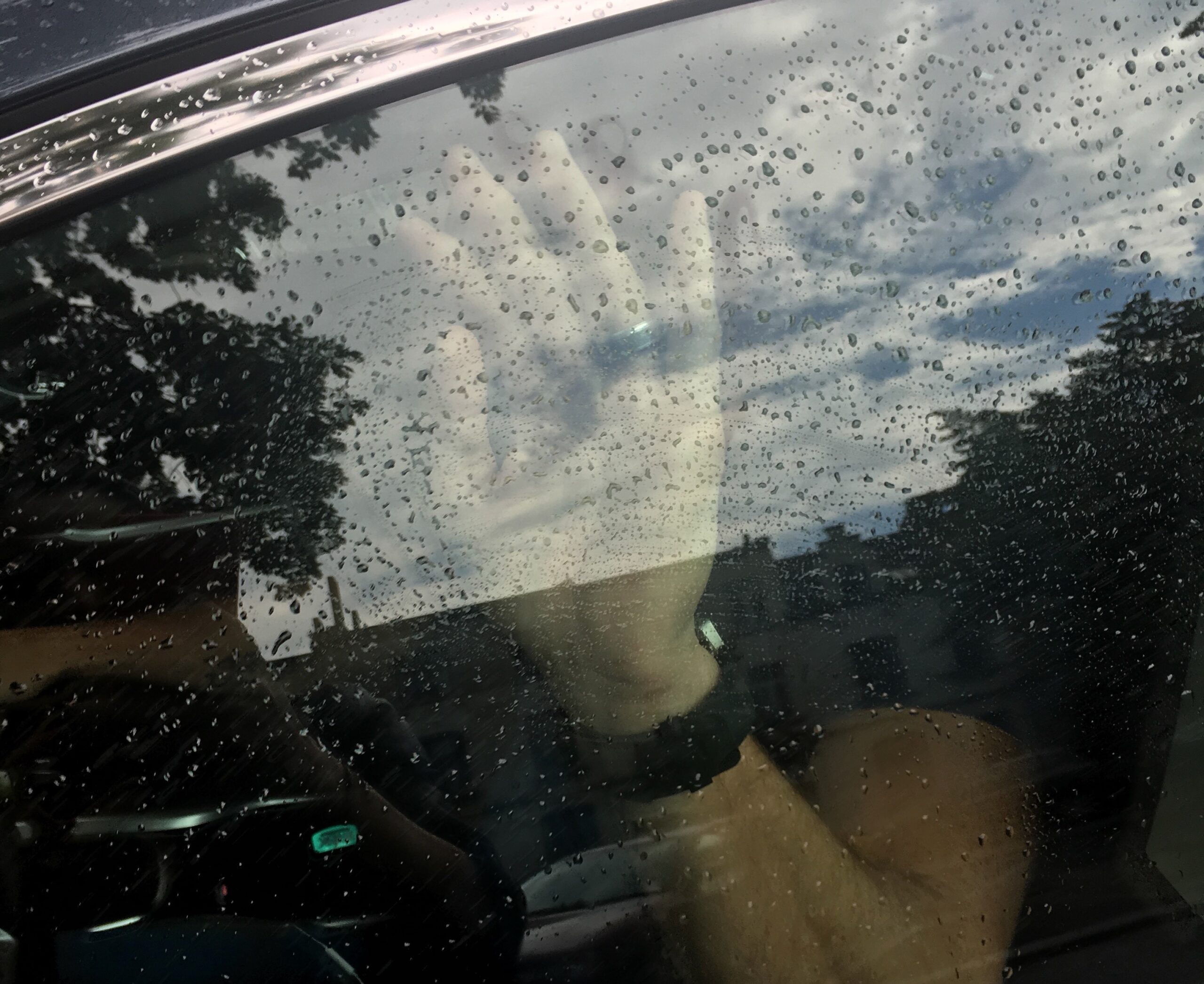
Other messages spoke of “headset cams”, a “baby-seat cam”, and “soaking” – industry jargon for placing a remote cam used for continuous filming.
“Soaked windows,” Botham reported on 20 March 2017, for instance.
And in notes reminiscent of the 1954 film noir Rear Window by director Alfred Hitchcock, Botham also wrote on 8 November 2017: “BJ [Bota Jardemalie] was sat in the window last night working. When [name withheld by EUobserver] came back he was sat with her … they didn’t kiss or embrace at all”.
“The whole time they [Jardemalie and another associate] were sat around her MacBook and at times speaking on the phone. He then left. No intimacy was seen,” Botham reported on another occasion the same month.
“BJ is back and forth from her bedroom laying on the food and alcohol [for a Halloween party],” he reported on 25 October 2017.
Several messages detailed where and when she walked her dog.
Botham’s team used to follow her and her family on foot, do “drive-pasts”, and “looping” (jargon for switching cars while following someone), and obtained new hire vehicles every four days to avoid detection, the files said.
“Lunch time BJ and [name withheld] drove north to Brugmann Square, where they briefly looked inside a children’s clothes shop before having their hair done in the salon next door,” another message, on 30 August 2017, noted, for instance.
There were 54 messages which indicated “placement of a tracer” on Jardemalie’s car.
Other texts spoke of detailed plans to go through her bins.
“Consider use of three R’s: Retrieve, Review, Replace … where the ‘product’ [her garbage] is taken and sorted through (if practical & necessary) and paper/product removed and that same bag is put back,” Botham said on 14 May 2017.
And whether BTA Bank was really trying to recover money or just bully the Kazakh regime’s opponents, it had deep pockets for its private espionage operations in the EU.
The Uccle apartment Botham hired alone cost €3,300/month and had been taken for a long-term contract worth €90,000.
The Diligence operation in Brussels involved several people, expensive tech, went on for eight months before it was interrupted, and would have cost at least €50,000/month in client fees, estimated the Belgian private eye who asked not to be named.
And the Botham files spoke of parallel surveillance work on Ablyazov’s associates in France and Poland.
In drawing its red line, the Belgian federal prosecutor had originally sought a two-year sentence for Botham.
But the Belgian judge sentenced him to just six months (if he ever came back) on Thursday because, she said, the magistrates should have gone further in building their case against Diligence, as well as Botham, using international “mutual legal assistance” measures to seek evidence in London.
And she awarded Jardemalie just €1 compensation for harassment (instead of the €20,000 Jardemalie had asked for) on a technicality – because the Kazakh barrister had not gone to a doctor to formally certify her emotional distress.
“I know she’s cried. I know she suffered, even though she didn’t go to a doctor,” Jardemalie’s lawyer, Knaller, had pleaded in the Palais de Justice at last December’s hearing.
“Don’t punish her just because she’s a strong woman,” Knaller said.
Diligence’s Williams declined to comment. Botham didn’t reply to three emails sent to his address.
It remains to be seen if the judgment against Diligence’s former man in Brussels acts as a deterrent to others who would do the same in future.
But for her part, Knaller underlined the importance of the issues at stake.
“When she [Jardemalie] came to Brussels, she felt safe here. She thought she was in a country that can protect her, but even though it’s the capital of Europe, given these capabilities [private-intelligence firms’ modus operandi], we can’t be sure,” Knaller said.

 THIS WEEK: ECB set to hike rates, as capital markets union and climate top the EU agenda
 Andrew Rettman