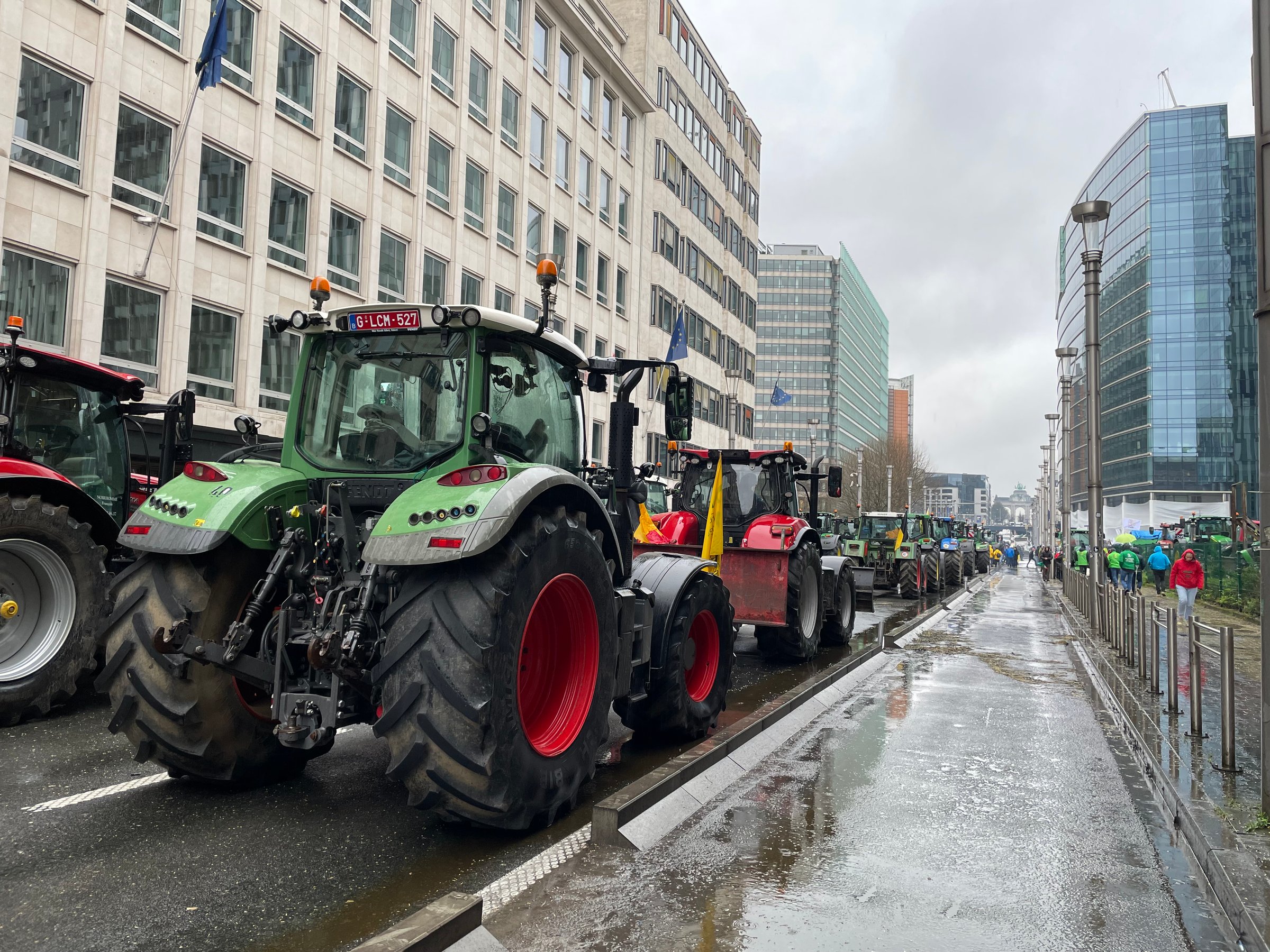
Around 1,000 tractors surrounded the Schuman EU quarter in Brussels on Monday (26 February) where agriculture ministers were meeting to discuss their response to the situation of farmers across the EU.
“We hear, clearly, their complaints,” said Belgian agriculture minister David Clarinval, ahead of the council meeting.
But their violence is “counterproductive” in terms of the image and the impact on the world of agriculture, he also said. “It is not the way of negotiating and it is unacceptable no matter whether is farmers, football hooligans or the Covid protest[ers].”
It’s the second time in less than a month that farmers from different EU countries have entered the Belgian capital to call on the EU to act against “unfair” competition and prices.
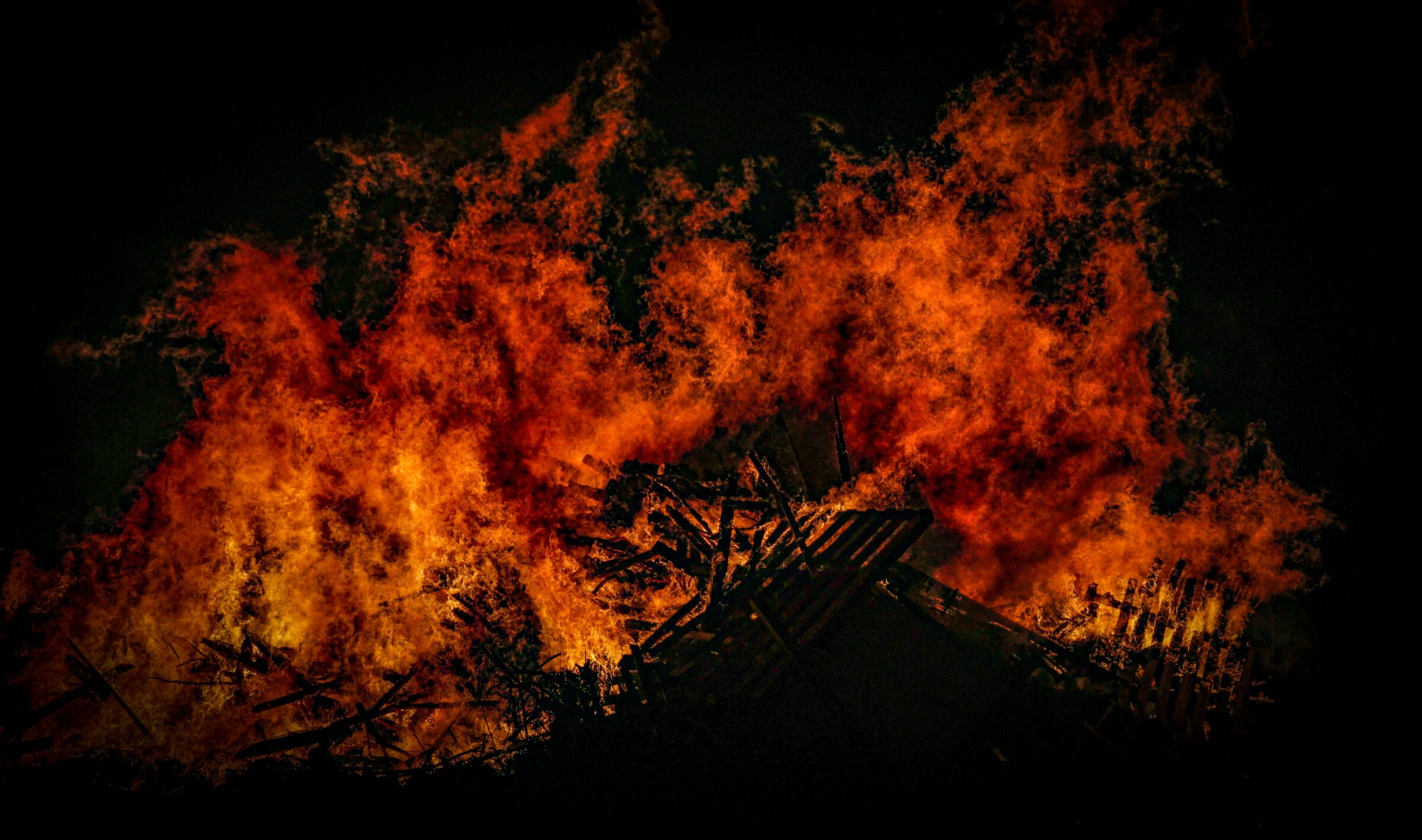
But this time the protesters went further and were more violent, setting fires and confronting police with glass bottles, eggs and small explosives, which prompted law enforcement officers to use water cannons and tear gas.
Monday’s protest follows weeks of demonstrations across Europe in which farmers have expressed their concern and anger over what they say are rising production costs, insufficient subsidies, stricter environmental regulations and the influx of cheaper agricultural imports from third countries facing fewer such obligations.
“Farmers are angry because we work hard, we produce the food that people need, and we don’t make a living,” Morgan Ody from the organisation La Via Campesina, told EUobserver, noting she earns half the minimum wage in France every month.
![[Interview] ‘Some of the resistance comes from people fearing they’ll end up without a job,’ says industry expert on Europe’s slow electrification](https://static.euobserver.com/2026/07/anja-van-de-gronde-PY7r5dJ_v-Y-unsplash-2400x1602.jpg)

 Elena Sánchez Nicolás