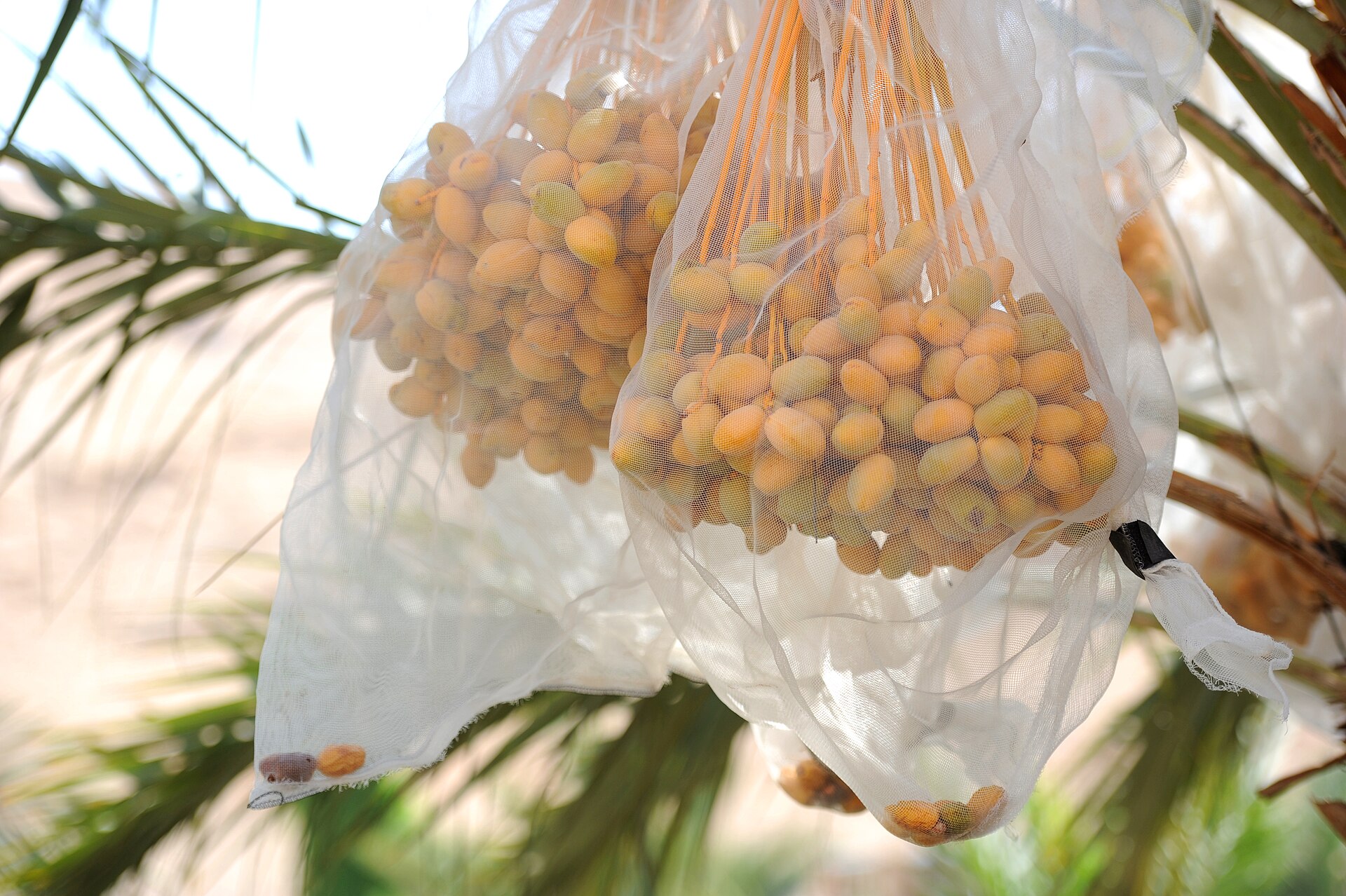
Despite a strict Spanish ban on products from the illegally-occupied territories, three Israeli agricultural giants are openly boasting about shipping dates and nuts into the country — raising questions over loopholes in Spanish customs and law enforcement.
Field Produce Marketing, Hadiklaim, and Agrifood Marketing are three Israeli companies focused on the production and sale of peanuts, almonds, and, above all, dates.
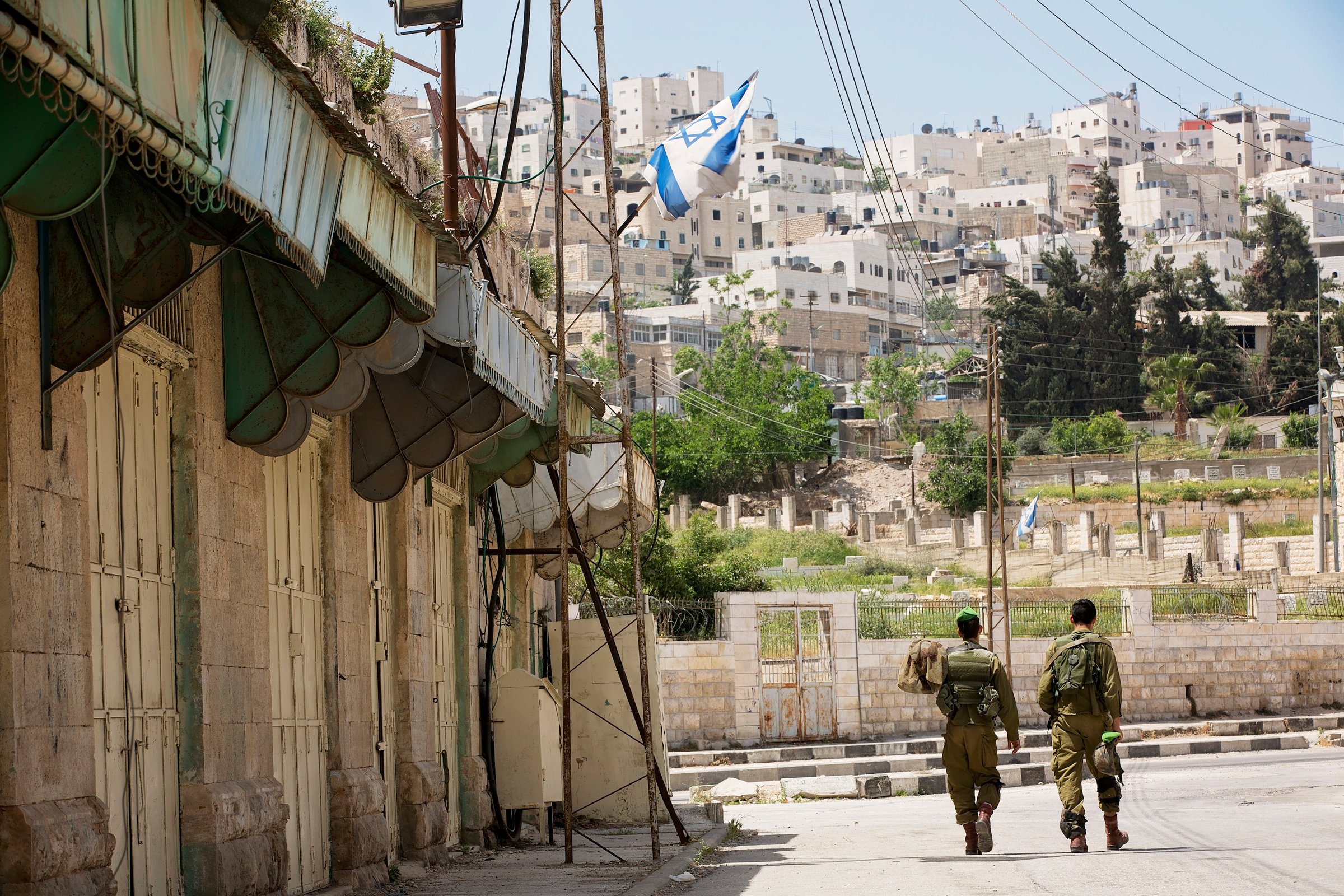
All three have plantations and warehouses in the Palestinian and Syrian territories illegally occupied by Israel in the West Bank and the Golan Heights.
And all three export agricultural products to several European Union countries, including Spain.
This is the conclusion of a recent investigation by the French group International Cooperation for Development and Solidarity (CIDSE) and the Israeli research centre Who Profits, published by EUobserver.
EUobserver shared its database with the Spanish outlet Público, which verified that all three companies boast on their websites about reaching the Spanish market (as advertised as of mid-July 2026).
Distributing these products is illegal in Spain under Royal Decree-Law 10/2025— a law designed to stop trade with occupied Palestinian territories and intended to respond to demands by the International Court of Justice (ICJ), which in 2024 issued an advisory opinion urging all states not to recognise or cooperate with territories illegally occupied by Israel.
Tel Aviv has continued expanding its borders beyond the limits granted by several UN resolutions.
And agriculture, explained CIDSE researcher Dorien Vanden Boer in a conversation with Público, must be understood as one of many strategies Israel uses "to dispossess Palestinians of their land and expel them," alongside war, the outlawing and destruction of civilian infrastructure, the creation of firing ranges, and the designation of archaeological sites, among others.
Field Produce Marketing, Hadiklaim, and Agrifood Marketing are not the only companies involved.
In the database shared by EUobserver with Público, three other Israeli companies allegedly continued exporting products from occupied territories to Spain: Agrexco Carmel Agricultural Export Company, Hamat Group Ltd, and Aqwise Wise Water Technology.
Unlike the first three, Público was unable to confirm whether these firms explicitly advertise that they still ship goods to Spain following the entry into force of Royal Decree-Law 10/2025.
All six Israeli companies declined to respond to requests for information made prior to publication.
Público also asked the Spanish Tax Administration Agency (AEAT) whether sanction proceedings were open against these or other Israeli companies, but the agency said it could not provide the information because it rests with individual customs offices and is not available "in an automated manner."
Cultivating dispossession in the occupied West Bank
Field Produce Marketing operates one of its four processing plants in the Yafit settlement in the Jordan Valley, inside the occupied West Bank (renamed Judea and Samaria by the Israeli administration) — a detail the firm displays on its website. Registered as a private Israeli company, it exports 65 percent of its output through partnerships with supermarket chains, coffee roasters, and nut distributors across Europe.
Its core business centres on growing and selling peanuts, almonds, and Medjool dates — one of the most common date varieties in Spanish supermarkets.
Field Produce Marketing lists three companies among its client portfolio that buy and sell in the Spanish market: Delinuts, Importaco, and La Piedra Redonda. The first is a Galician brand making natural energy bars. The second is one of the main nut distributors in Spain, based in Valencia and a major supplier for Mercadona's store brand, Hacendado.
La Piedra Redonda works with the Oro del Mediterráneo brand, available in various retail outlets.
All these details are published on Field Produce Marketing's website.
Público contacted all three Spanish companies to ask about the status of their commercial relationships with Israeli suppliers. Delinuts and Importaco did not respond. La Piedra Redonda denied importing products from Israel, despite appearing on Field Produce Marketing's client list.
Hadiklaim is a cooperative primarily marketing dates and date products from the Jordan Valley and the Dead Sea area. Its plantations are located in occupied West Bank settlements, including Yafit, Galil, Almog, Beit Ha'arava, and Tomer, according to a recent report by Who Profits.
"We export our nine date varieties to over 50 countries across five continents," the company states on its website.
And Spain remains listed as a primary destination on Hadiklaim’s official map.
The cooperative operates under several brands, including MyJool, Jordan River, and King Salomon Dates.
EUobserver reported, using data prior to the February 2026 resolution, that the firm's dates could be found in Aldi, El Corte Inglés, Lidl, Carrefour, and Mercadona.
Carrefour and Mercadona denied to Público that they currently stock goods originating from occupied Palestinian territories, while the other three chains declined to respond.
Hadiklaim also received approximately €3m in total compensation from the Israeli Ministry of Economy between 2019 and 2021 due to reported drops in exports. The company did not respond to repeated inquiries.
Finally, Agrifood Marketing maintains plantations in the Jordan Valley and Dead Sea region, enabling it to "supply all date varieties (...) year-round."
The company notes on its website that the occupied West Bank offers a "perfect climate" for farming due to its "unique combination of desert warmth, low humidity, and the expertise of Israeli farmers."
Its global distribution network includes the US, France, Germany, Italy, the Netherlands, Japan, and Spain, according to its online map. The company declined to answer Público's questions and does not list its specific Spanish clients on its portal.
Spanish supermarkets' positions
Major supermarket chains in Spain insist they adhere to the resolution issued by the State Tax Administration Agency in February 2026.
However, they have not disclosed what internal oversight mechanisms they use or how many commercial agreements with suppliers have been terminated under the new legal framework.
Responses varied by company:
- Carrefour Spain: A spokesperson stated it does not sell "products originating from Israel or Palestine" in Spain.
- Eroski: Stated that its decision "reflects the brand's commitment to act consistently with its identity and its pledge to responsible purchasing practices that respect human rights and human dignity."
- Lidl: Reaffirmed its "firm commitment to human rights across all operations," stating it "strictly complies with current laws in every market" to ensure full compliance with the 10 February, 2026 resolution. It added that suppliers are held to a strict international code of conduct with immediate action taken upon violations, though it did not detail its auditing processes or confirm whether any contracts had been canceled.
- Mercadona: Insisted on its adherence to current legislation and stated that it "informs suppliers of the need to comply," without detailing its verification mechanisms.
- Ahorramás & Aldi: Stated that they preferred not to provide comments for the article.
- Alcampo, Dia & Supermercados El Corte Inglés: Did not respond to inquiries.
This article was originally published on the Spanish outlet Publico on 19 July 2026.

![Rima Hassan in her Brussels office: '[It's] not merely a lack of courage; it is a criminal policy to advocate for a two-state solution today'](https://static.euobserver.com/2026/07/DSC_0345-2-2400x1602.jpg)




 That Germany’s Holocaust guilt matters less than Palestinian and Lebanese lives


 The threat of ‘total economic war’ looms. And July sees highest civilian deaths since 2022 (Ukraine Battlefield update, Day 1,616)