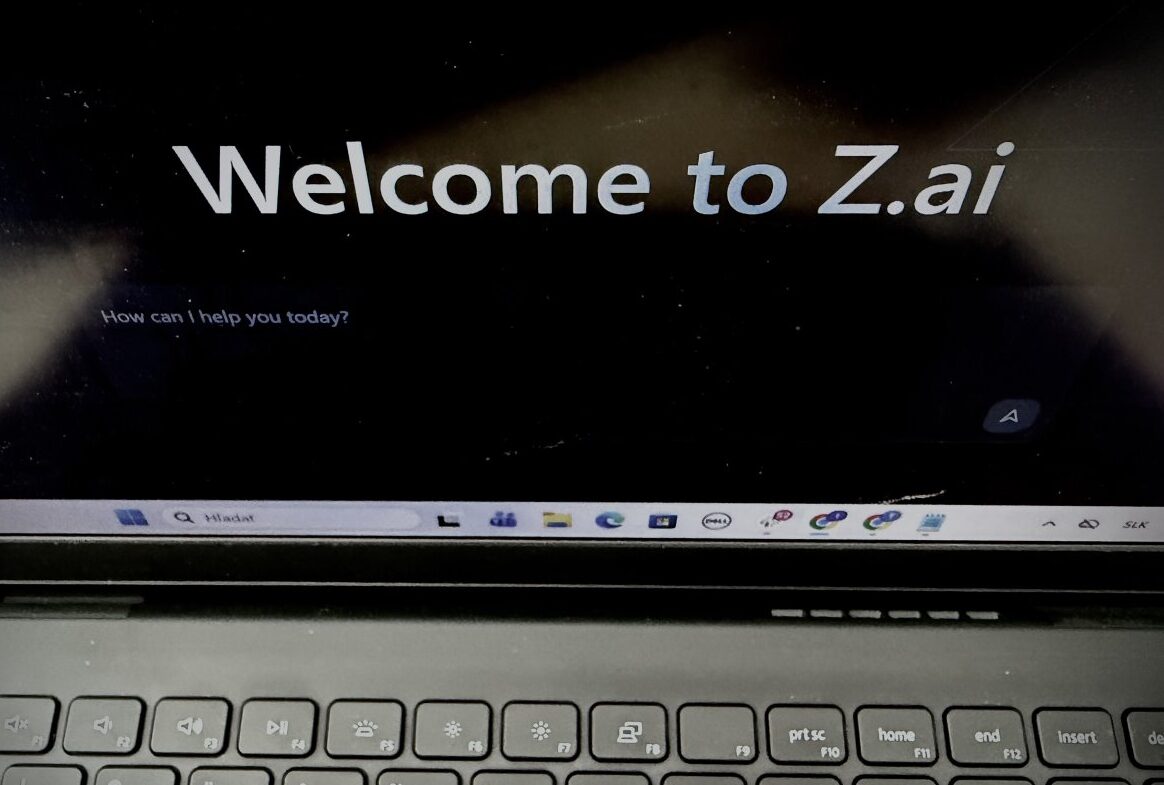
Chinese artificial intelligence start-ups are increasingly producing models that can compete with Western ones. They are also significantly cheaper to run.
China became a hub of industrial manufacturing because it was able to produce essentially the same goods as Western countries, but much more cheaply. Something similar is now happening in artificial intelligence.
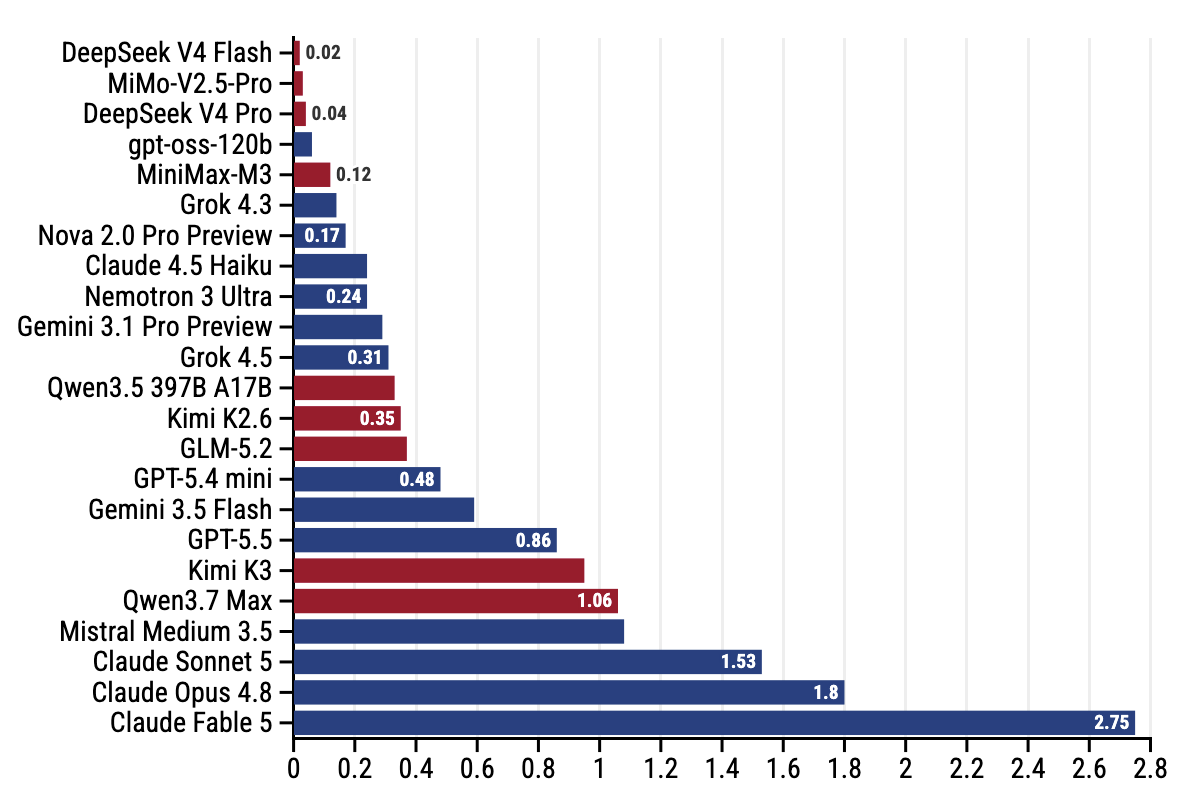
Chinese models from DeepSeek, Z.AI and Moonshot AI are comparable in performance to US systems from OpenAI and Anthropic. However, the average cost of carrying out a standardised task using Kimi 2.6 or DeepSeek V4 Flash ranges from two to 33 cents. The same task costs $2.75 [€2.42] using Anthropic’s Claude Fable 5, according to the Chart of the Day, based on data from the Artificial Analysis benchmarking website, which Bloomberg published.
Chinese models undercut many Western flagship models on price
Cost in US dollars per standardised task
“Chinese start-ups have introduced a number of techniques to boost efficiency. In practice, this means they seek to get the most out of every unit of computing power,” said Selina Xu, China research lead for former Google chief executive Eric Schmidt, on the China Decode podcast.
US restrictions on exports of cutting-edge AI chips also forced them to take this approach. “As a result, their models are far more efficient, both in terms of capital and computing power, than models from OpenAI and Anthropic,” Xu added.
Leaders of OpenAI and Anthropic are sounding the alarm. They argue that powerful new models from China will lead to a “dystopian” future for artificial intelligence and, without regulation, pose unacceptable security risks.
Some analysts following the artificial intelligence sector, however, argue that the two companies are simply trying to weaken their competitors. At the same time, they are preparing to go public.



![Rima Hassan in her Brussels office: '[It's] not merely a lack of courage; it is a criminal policy to advocate for a two-state solution today'](https://static.euobserver.com/2026/07/DSC_0345-2-2400x1602.jpg)

 Tomáš Hrivňák