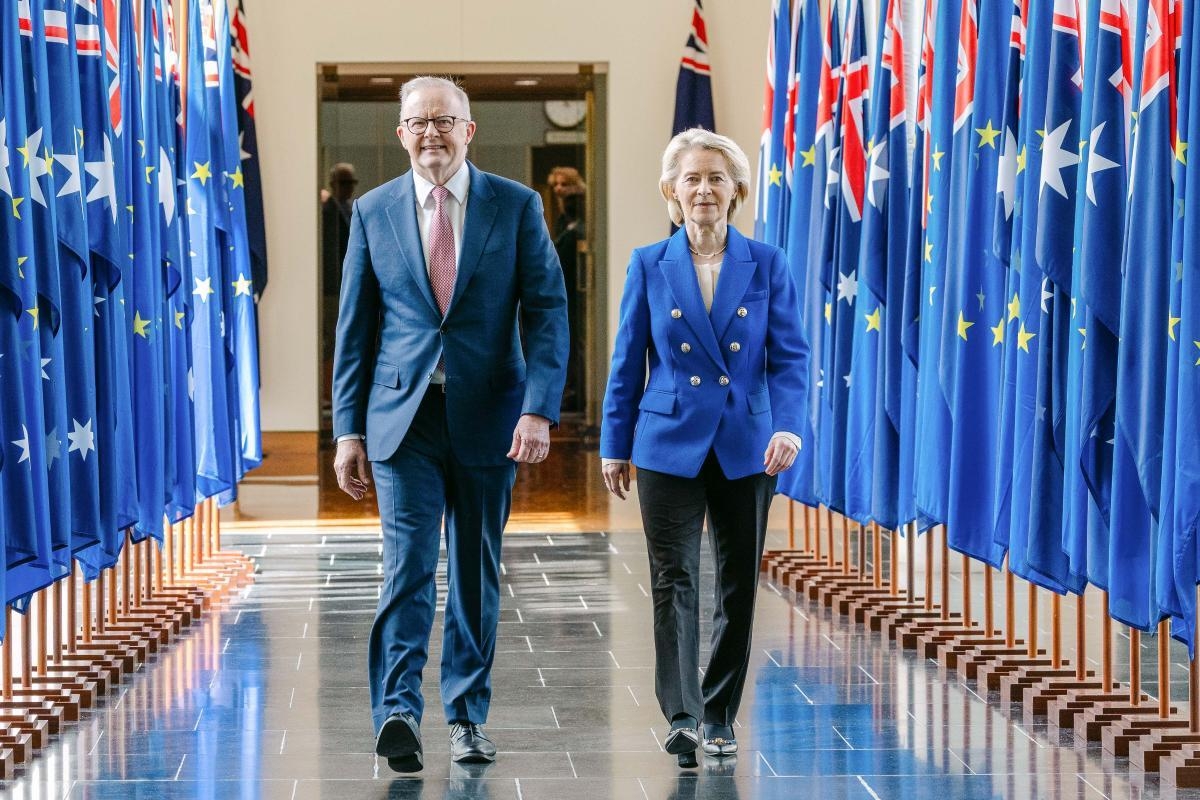
The European Union and Australia have officially signed a long-awaited trade agreement, marking a significant step in mutual efforts to diversify trading partners.
The deal, in the making since 2018, gained momentum as both Brussels and Canberra looked to cut their reliance on China and the United States.
“In a world where major powers use tariffs to exert pressure and treat supply chains as vulnerabilities to be exploited, we show that free trade can deliver positive outcomes,” EU Commission president Ursula von der Leyen told reporters in Canberra on Tuesday (24 March).
“Trust is more important than transactions,” she also said.
Australian prime minister Anthony Albanese called the pact “a significant economic milestone” for his country, saying it is expected to boost exports of red meat, wine, and critical minerals.
The deal grants Australia quota-based access for beef, lamb, and dairy products to the EU, while European exporters gain near-zero tariffs on vehicles, dairy, and other goods.
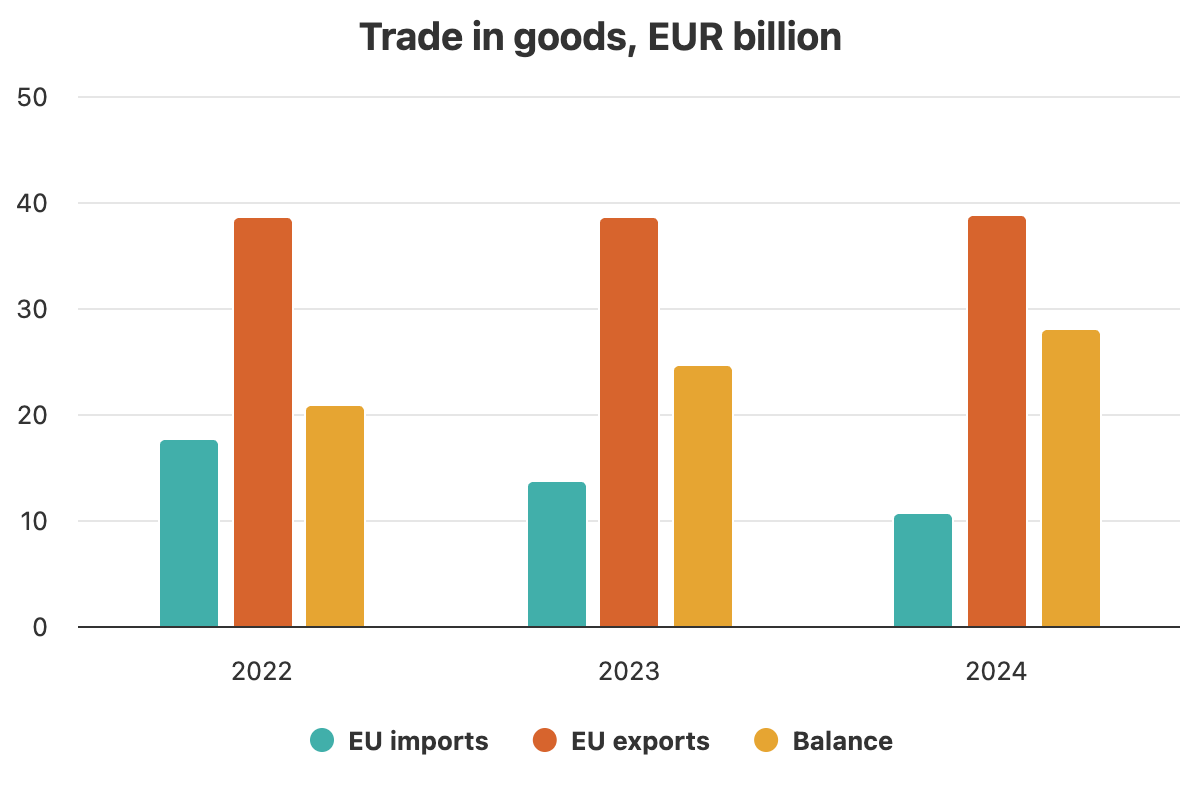
The commission estimates EU firms could save €1bn annually. Australian meat exporters in turn can send roughly 30,000 tonnes of beef, 25,000 tonnes of sheep and goat meat, and 5,000 tonnes of butter at reduced duties, with higher tariffs beyond the caps.
The deal also makes sure that certain European food and drink names, like Italy’s Pecorino Romano cheese and Greece’s Ouzo, are protected.
Australian prosecco can still be sold in Australia, but after 10 years it won’t be allowed to be sold in Europe under that name anymore.
For cars, Australia will lower its tax on luxury vehicles, making it easier for European car makers to compete. The agreement also makes it fairer for European companies doing business in Australia, giving them the same treatment as local firms.


 Wester van Gaal