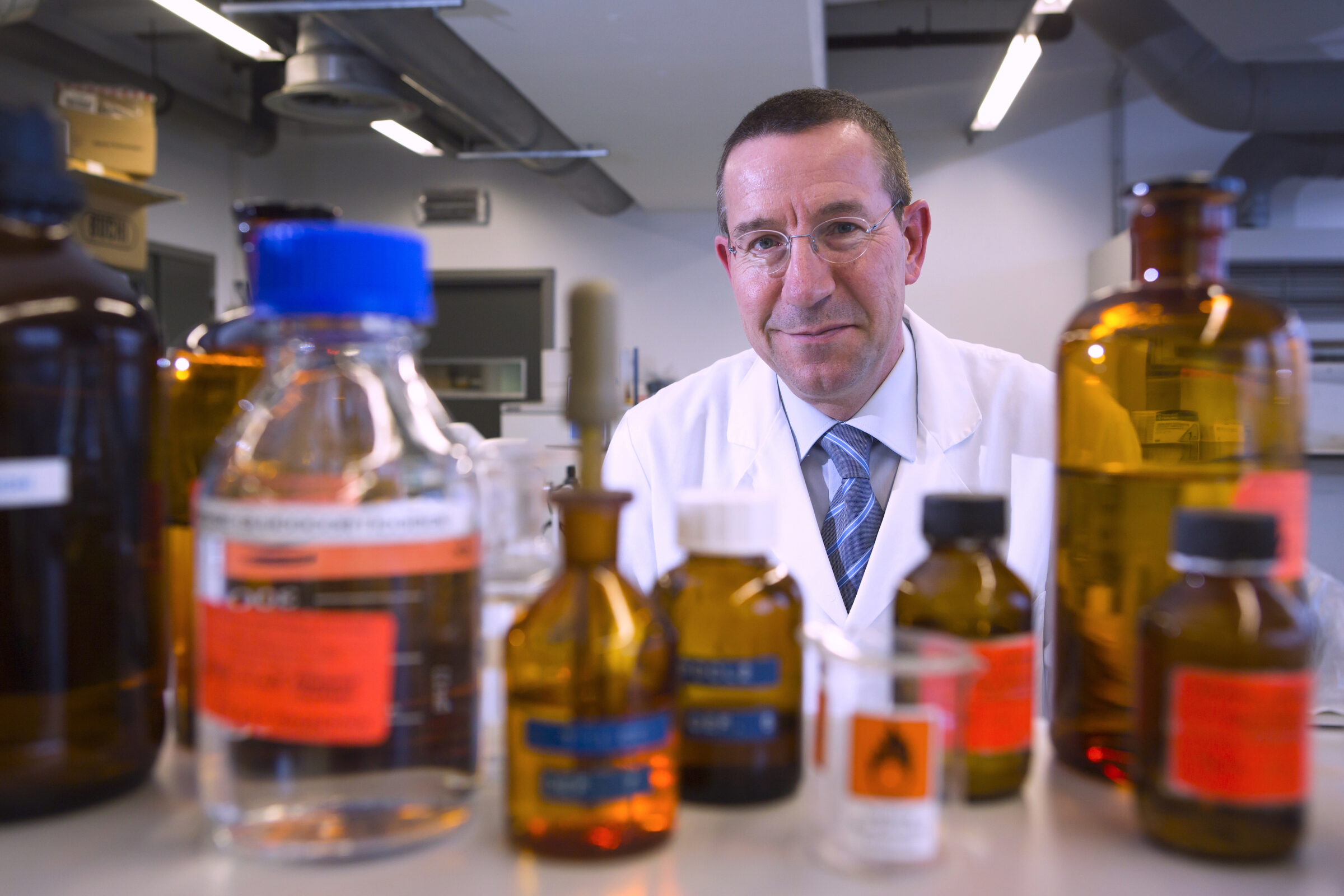
The ‘frog’ poison that killed Russian dissident Alexei Navalny was likely made in a high-end lab, according to a Belgian toxicologist.
Navalny died in prison in Russia in 2024 after being poisoned by “epibatidine … a toxin found in frogs in South America”, said five European countries on 14 February, referring to the ‘Anthony poison arrow frog’, which is native to Ecuador and Peru.
And it would make a frightening murder weapon, said Jan Tytgat, a forensic toxicologist from the KU Leuven university in Belgium.
“Epibatidine … is a small molecule that can easily be administered via multiple routes. You can get it via dermal absorption, inhalation, via food,” he told EUobserver in an interview on Wednesday (18 February).
Its effect is the same as Novichok, a Russian nerve agent banned by the Organisation for the Prohibition of Chemical Weapons (OPCW) in The Hague.
In both cases, a victim’s body reacts as it would to an overdose of acetylcholine, with salivation, muscle twitching, stomach convulsions, and breathing failure.
Acetylcholine is a neurotransmitter between the brain and muscular system, which can also be overstimulated by nicotine.
“As with Novichok, the nerve gas [used by Russia] in the past, the symptoms that a victim of epibatidine experiences are exactly the same: We talk about cholinergic syndrome,” Tytgat said.
And the Belgian expert knew epibatidine inside out.
"John W. Daly was a [US] scientist who discovered this molecule in the 1970s. And I had a chance to personally know him because he gave my lab some of these molecules for drug discovery," the KU Leuven professor told EUobserver.
The Kremlin immediately rubbished the European accusations on Navalny as disinformation, but Tytgat said epibatidine would have been hard to hide even if any tests on tissue samples smuggled out of Russia had been performed years later.
"When you apply high-resolution mass spectrometry, which is a typical detection method in clinical or forensic toxicology, the [epibatidine] molecule would definitely bounce up and be identified," he said.
"The molecule is not very prone to instability [over time]," he added.
"It's different from a very exotic enzyme from a poisonous African snake, for instance — that would be much more challenging to detect," said Tytgat, as snake-venom enzymes decay with the passage of time.
And he was confident Navalny's assassins made the epibatidine in a sophisticated lab, in what would be a violation of the UN's Biological and Toxin Weapons Convention.
For one, the Anthony poison arrow frog only secreted the enzyme in response to natural predators in the wild and only if it ate the right insect, which, in turn, fed on the right plant in its Amazonian habitat, said Tytgat.
And true epibatidine would be even rarer because "the amounts that can be found in the skin of this frog are so tiny that it's unlikely that you'd use natural products if you wanted to poison somebody," he added.
"It's far easier to produce a milligramme quantity synthetically and that you can use for a particular malicious purpose," he said.

Epibatidine recipe public
Private-sector pharmaceutical companies had already synthesised epibatidine in the 1990s as a potential pain drug, which meant there was scientific literature on how to do it.
"Some pharma companies wanted to develop it as a legitimate pain killer, far more potent than morphine. But the poisonous nature of its 'nicotine effect' was too big and they did not pursue this path," Tytgat said.
At the same time, any synthetic epibatidine manufacture would point to a state-level actor, the expert indicated.
"I'm not saying that a layman can do it or a student can do it. It takes some knowledge, but it's possible," he said.
"There are several examples of batrachotoxins which even the brightest organic synthesisers found difficult to make and sometimes they are really astonished at what nature can do … it's so expensive and so difficult to make," said Tytgat.
The Belgian professor said there were very few documented uses of exotic animal poisons in criminal cases in Europe.
"But it has happened before," he said, which was why the OPCW had a list of forbidden war-chemicals that included natural venoms, such as also tetrodotoxin (TTX), for instance.
TTX came from the ovaries of the Japanese 'Fugu' pufferfish.
"If you eat a small dose, you feel a numbness, because it's a kind of local anaesthetic like lidocaine and cocaine," said Tytgat.
"But if you eat too much, you instantly die of heart failure. So TTX can easily be administered in food and can poison somebody," he added.
Russia's 'reckless' threat
Russia had also used Novichok against Navalny in an attack in Russia in 2020, which he survived.
It used Novichok in the UK in 2018 to try to assassinate a former Russian spy, Sergei Skripal, and it used radioactive polonium in the UK in 2006 to kill ex-spy Alexander Litvinenko.
But if this showed the UN was struggling to contain abuse of listed substances inside Europe, then use of poison was also a growing problem in transnational repression in Africa, where Tytgat has done extensive drug-discovery fieldwork, as well as further beyond, he said.
"Often these, let's say 'things' [poisonings], happen in central Africa or India, and then, quite often, there isn't a reliable scientific publication derived from the case," he added.
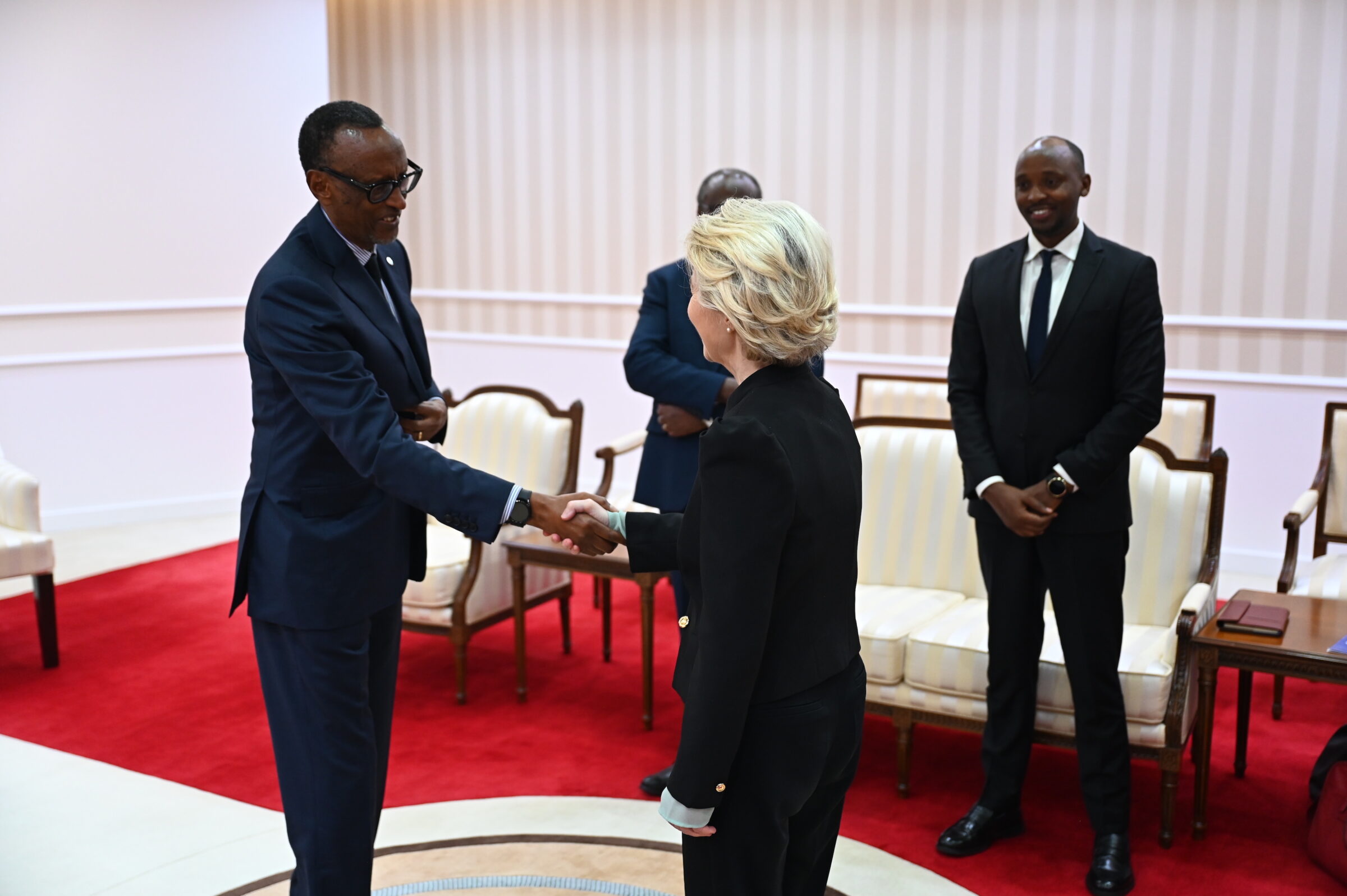
"But I'm convinced it [weaponisation of natural venoms] must have occurred," Tytgat said, amid storied accusations of use of poison by the Rwandan regime, for one.
Turning back to the Navalny case, the Russian foreign ministry said on Wednesday: "We demand they [the five European accusers - Britain, France, Germany, the Netherlands, and Sweden] hand over concrete data on this issue".
US secretary of state Marco Rubio described the Nato allies' report blaming Russia as "troubling", which fell short of an official American buy-in.
Embassies in The Hague of the five Navalny frog-poison signatories have submitted evidence to the OPCW director, in what might prompt a UN enquiry.
But when asked by EUobserver why the UK had waited two years after Navalny's death to publish its findings, the British foreign office declined to give further information.
"We will not comment on the details regarding how the [Navalny tissue] samples were obtained," a British spokesperson said.
"We have high confidence in the integrity of the process," they said.
The Dutch foreign ministry said the case took a long time as "we wanted to be absolutely confident in our assessment and employed rigorous testing and analysis to reach our conclusions."
"We ... will consult with international partners on further action to respond to this reckless Russian behaviour," it added.
The Swedish foreign ministry told us: "To our knowledge, this is the first time epibatidine was used in a targeted poisoning".
"If Russia or any other country tries to use epibatidine again, we are in a good position to detect its use," Sweden said.
This story was updated on 20 February 2026 to include the Swedish ministry's quote


![[Interview] The US Democrat trying to convince Brussels to stand up to Trump on methane](https://static.euobserver.com/2026/07/Captura-de-Pantalla-2026-07-13-a-las-18.28.15.png)




 Russian oil industry set back 20 years by Ukrainian strikes (Ukraine Battlefield update: Day 1,602)
 Missing the wood for the trees – the EU’s unloved deforestation law reaches endgame
 Andrew Rettman