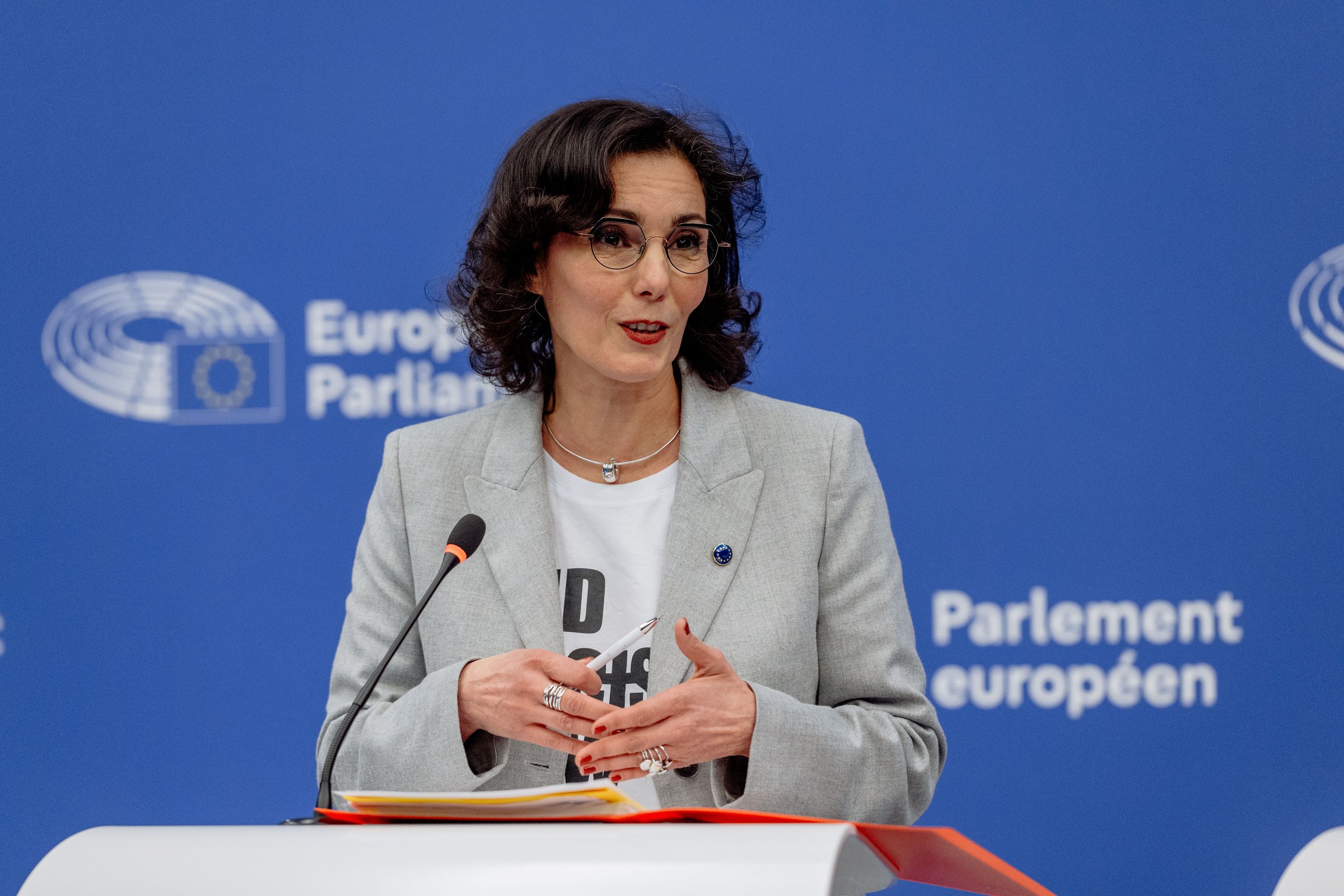
Most delegates in Davos this week were focused on whether US president Donald Trump would double down on or scale back his military threats against Greenland. So it was little surprise that few commented on the EU’s commitment, announced on the fringes of the World Economic Forum on Wednesday, to budget for €1.9bn in humanitarian aid for 2026.
The sums are small in relative terms.
Of the €1.9bn, the lion’s share of the EU funding promise is €557m, that will be spread across around 50 sub-Saharan African countries this year.
Kenya, for example, is home to the Kakuma and Dadaab refugee camps close to the country’s Sudan/Uganda and Somalian border respectively, which currently accommodate around 700,000 refugees. Yet Kenya received a mere €14.5m in humanitarian aid last year.
Meanwhile, officials from the UN World Food Programme tell EUobserver that funding cuts, including from the EU, have forced them to slash supplies of basic provisions in countries such as Kenya, Uganda and Chad, that are adjacent to conflict countries.
The funding constraints faced by the UN and hundreds of NGOs and development service providers in the field are only going to get tighter. Some UN officials, privately, fear that their organisation may not survive another decade.
The Paris-based OECD, which makes the rules on what can be classified as aid, has forecast that net Official Development Assistance (ODA) fell by 17 percent last year, with the figures set to be announced in April.

 Ukraine’s new French and Swedish jets will pose threat to Russia’s top warplanes (Ukraine Battlefield update: Day 1,605)

 Benjamin Fox