Earlier this week, French prime minister Élisabeth Borne presented her resignation letter, after having been informed by president Emmanuel Macron he wanted her gone in order to renew his cabinet.
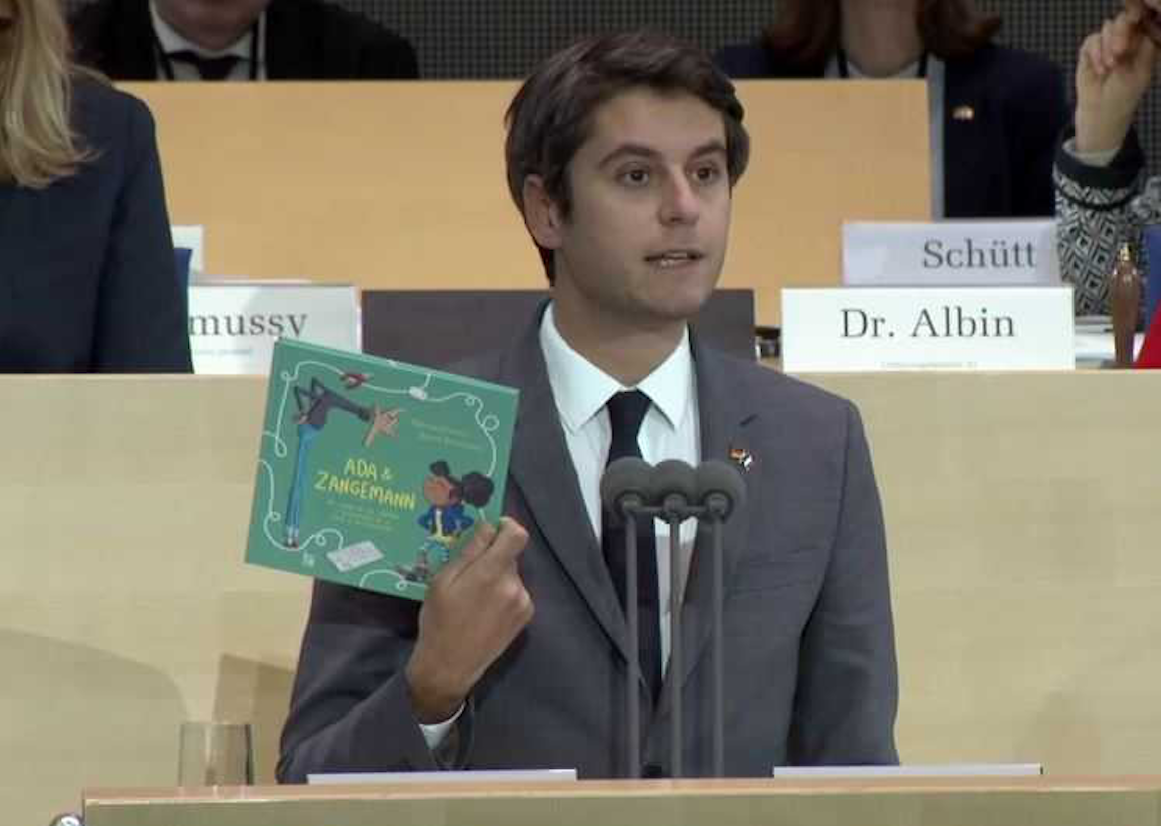
The 34-year-old minister of education, Gabriel Attal, was appointed shortly after to succeed her, and the transition of power took place that same afternoon.
Macron’s decision to reshuffle the cabinet didn’t come as a surprise. During the first two years of his second term, he and prime minister Borne pushed through widely-contested reforms and laws, many times by bypassing parliament, leaning on article 49.3 of the French constitution — a mechanism that allows the prime minister to force laws through parliament without a vote. Borne’s habit of using that tool even earned her the nickname “Madame 49.3”.
In her resignation letter, she specifically mentioned how proud she was of the pension reform (without mentioning the help of article 49.3) and, at the end of last year, the pushing through of the controversial new immigration law (without mentioning the help of the far-right to do so.)
The far-right Marine Le Pen called the country’s new immigration law “an ideological victory” and “a first step”. The law restricts foreigners’ right to social benefits, especially for the unemployed and allows France to strip dual nationals of their French nationality if they commit crimes. It also makes conditions for family reunification much tougher and strengthens the government’s ability to deport some groups of foreigners.
Macron himself has more than three years left in his current mandate. In several interviews, he has said he is planning for the 2027 presidential elections. His biggest fear is to be succeeded by his rival in the last two elections, Le Pen — the leader of the nationalist party National Rally. Recent polls have been devastating for him. Macron holds a record-low 30 percent approval rating while Le Pen’s party National Rally is ahead of his coalition by about 10 points in European elections polling.
The European elections in June are thus seen as a crucial test for the state of French politics.